 Kingdom Kutz Media
Home → Biblical Evidence
Biblical Evidence & Archaeology
Real archaeological discoveries, ancient inscriptions, and historical manuscripts that intersect with the biblical record — every entry sourced from a museum, university, or established research publication, with a link to learn more. A new fact from this collection is paired with today's Bible verse on the homepage.
The Tel Dan Stele
In 1993, archaeologists at Tel Dan in northern Israel found a 9th-century BCE stone inscription referencing the “House of David”, the earliest known reference to King David outside the Bible.
Discovered: 1993-1994, Tel Dan, northern Israel · Now at: Israel Museum, Jerusalem
Source: Biblical Archaeology Society ↗
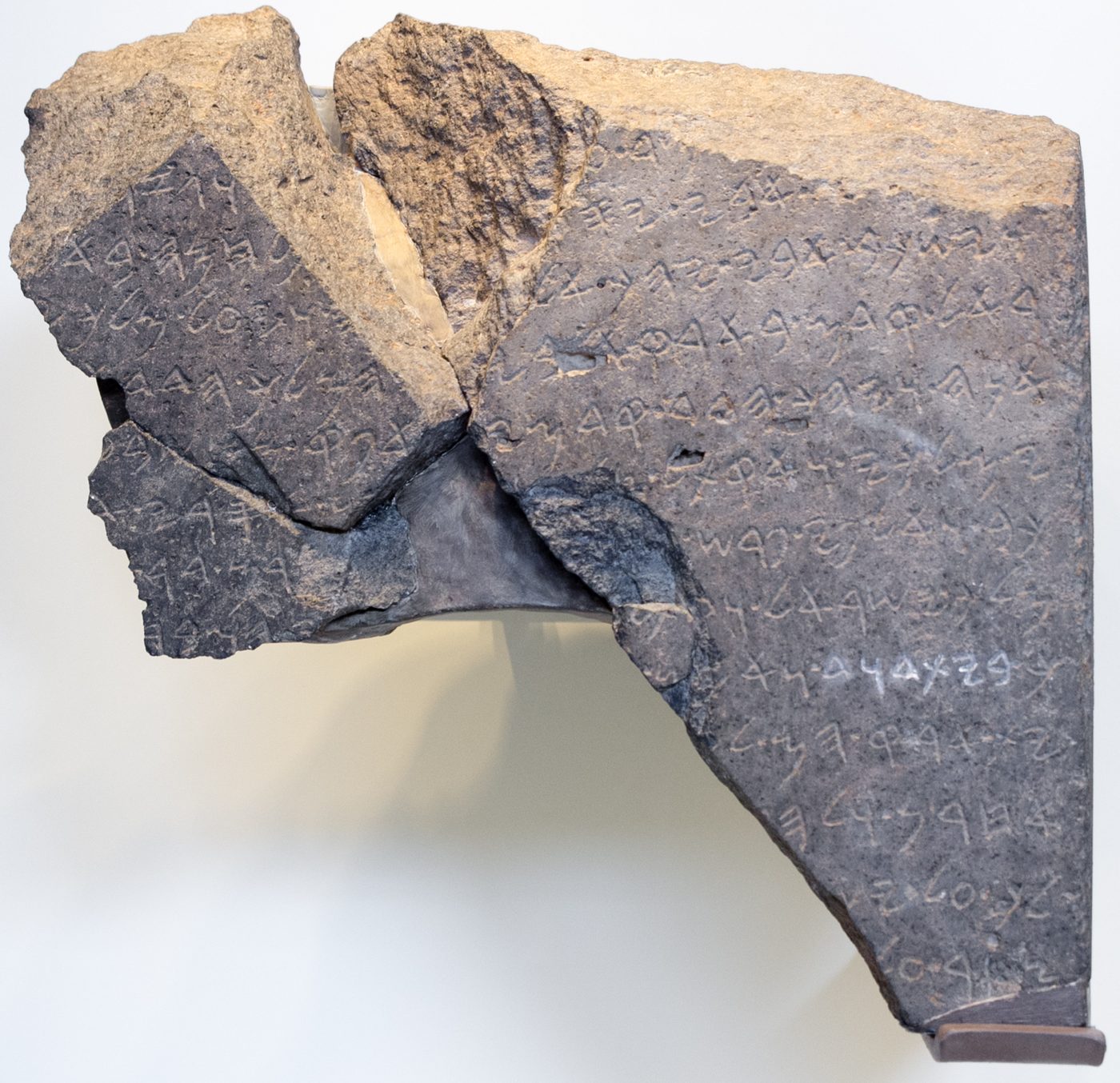
Tel Dan Stele on display at the Israel Museum, Jerusalem, photo by Oren Rozen (Poliocretes), CC BY-SA 4.0
The Mt. Ebal Curse Tablet
A folded lead tablet recovered from Mt. Ebal in 2019 was read by the excavation team, using X-ray tomography, as a curse formula naming God as 'YHW', echoing the blessing-and-curse language of Deuteronomy 27-28. Several independent peer-reviewed studies dispute that reading, arguing the marks may be natural corrosion rather than writing, so the inscription itself remains contested.
Discovered: Found 2019, announced 2022, Mt. Ebal, West Bank · Now at: Held by the excavating team, not on public museum display
Source: Wikipedia ↗
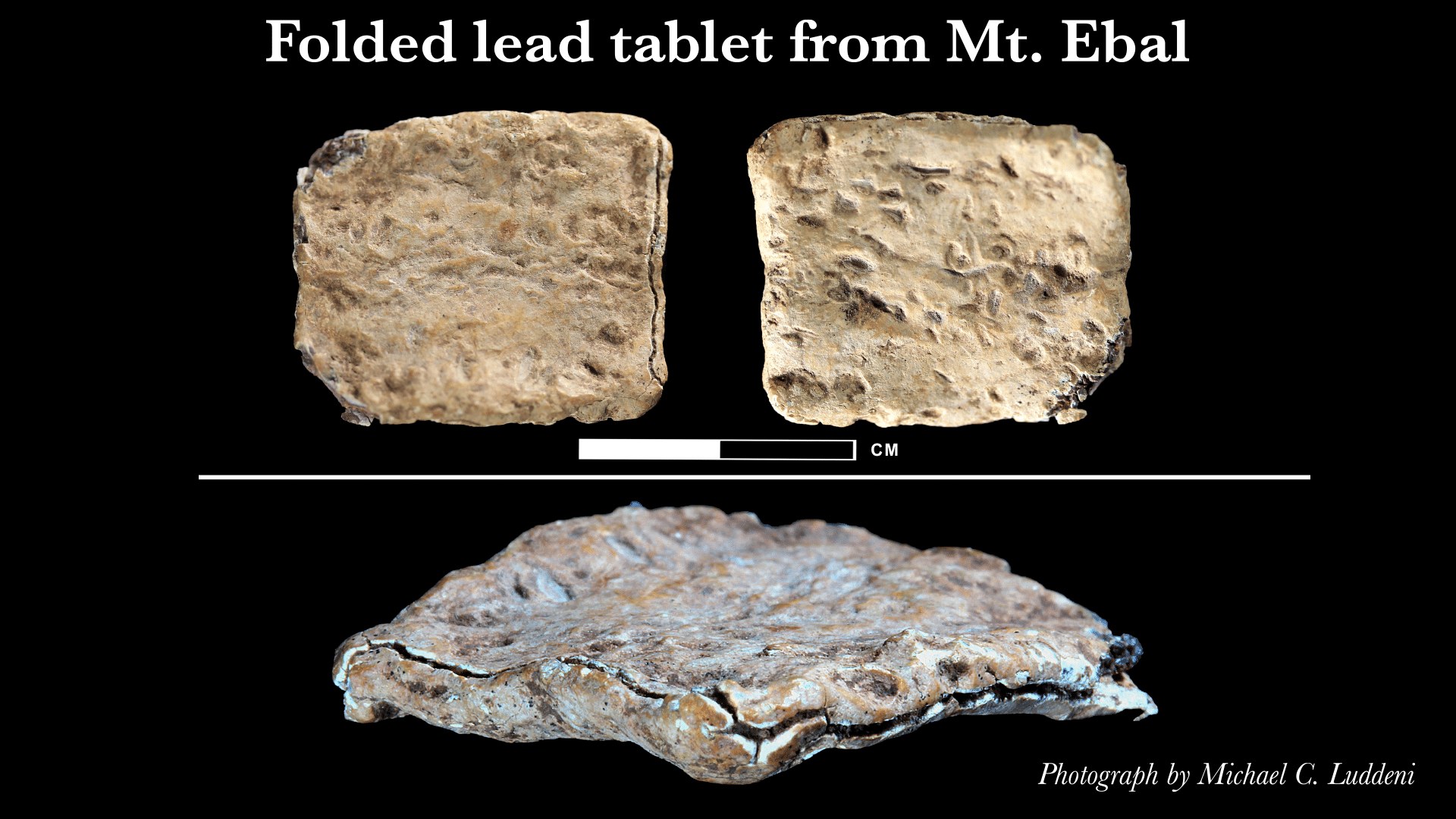
Photograph by Michael C. Luddeni, courtesy of Associates for Biblical Research
The Pilate Stone
In 1961, a limestone block found at Caesarea Maritima bore a Latin inscription naming Pontius Pilate as prefect of Judea, the first physical evidence he existed outside ancient texts.
Discovered: 1961, Caesarea Maritima, Israel · Now at: Israel Museum, Jerusalem
Source: Wikipedia ↗
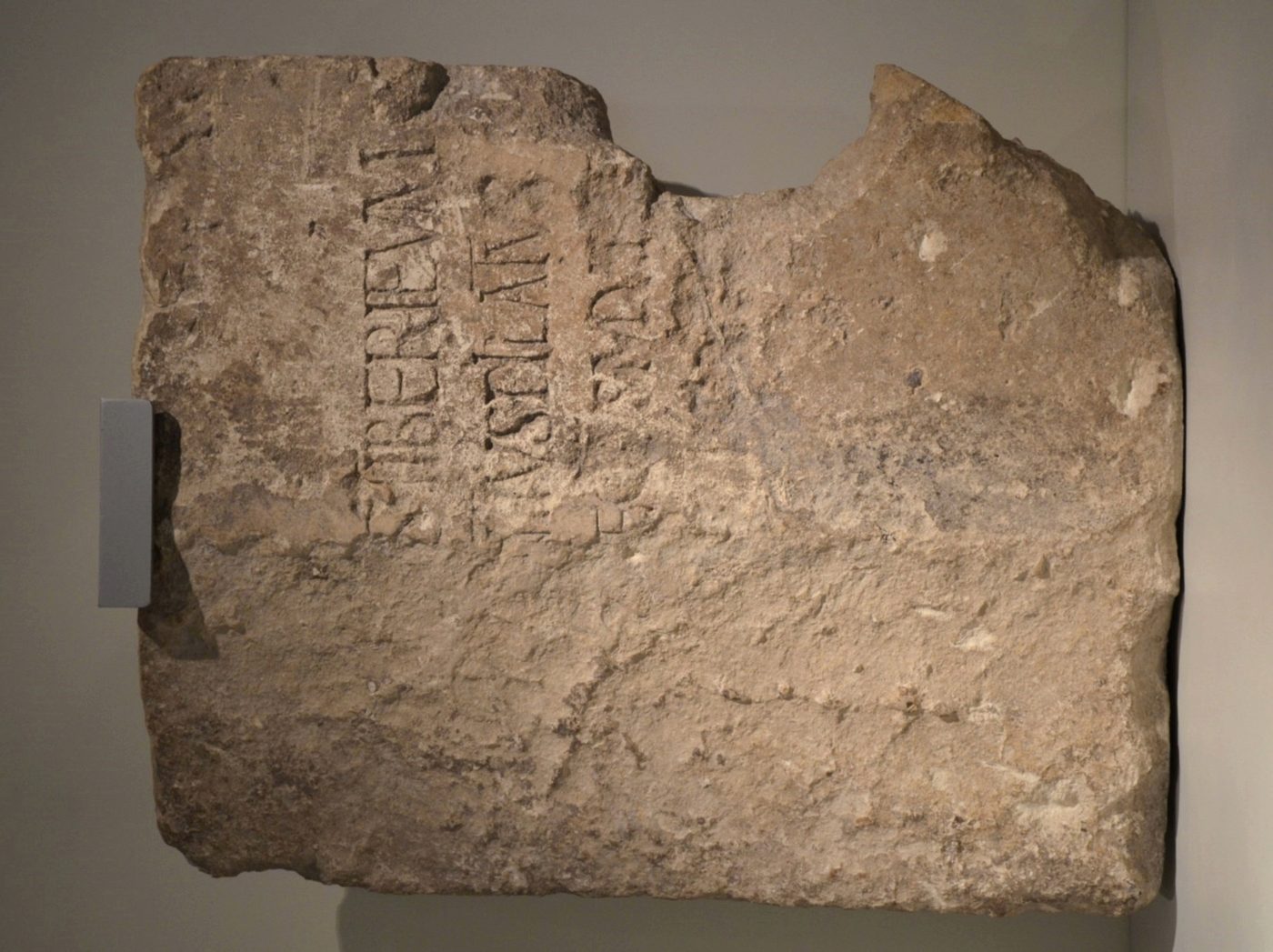
Photo by Carole Raddato from Frankfurt, Germany, CC BY-SA 2.0
The Merneptah Stele
The Merneptah Stele, an Egyptian monument from around 1208 BCE, contains the earliest known reference to “Israel” as a people outside the Bible itself.
Discovered: 1896, Thebes, Egypt (by Flinders Petrie) · Now at: Egyptian Museum, Cairo
Source: Biblical Archaeology Society ↗
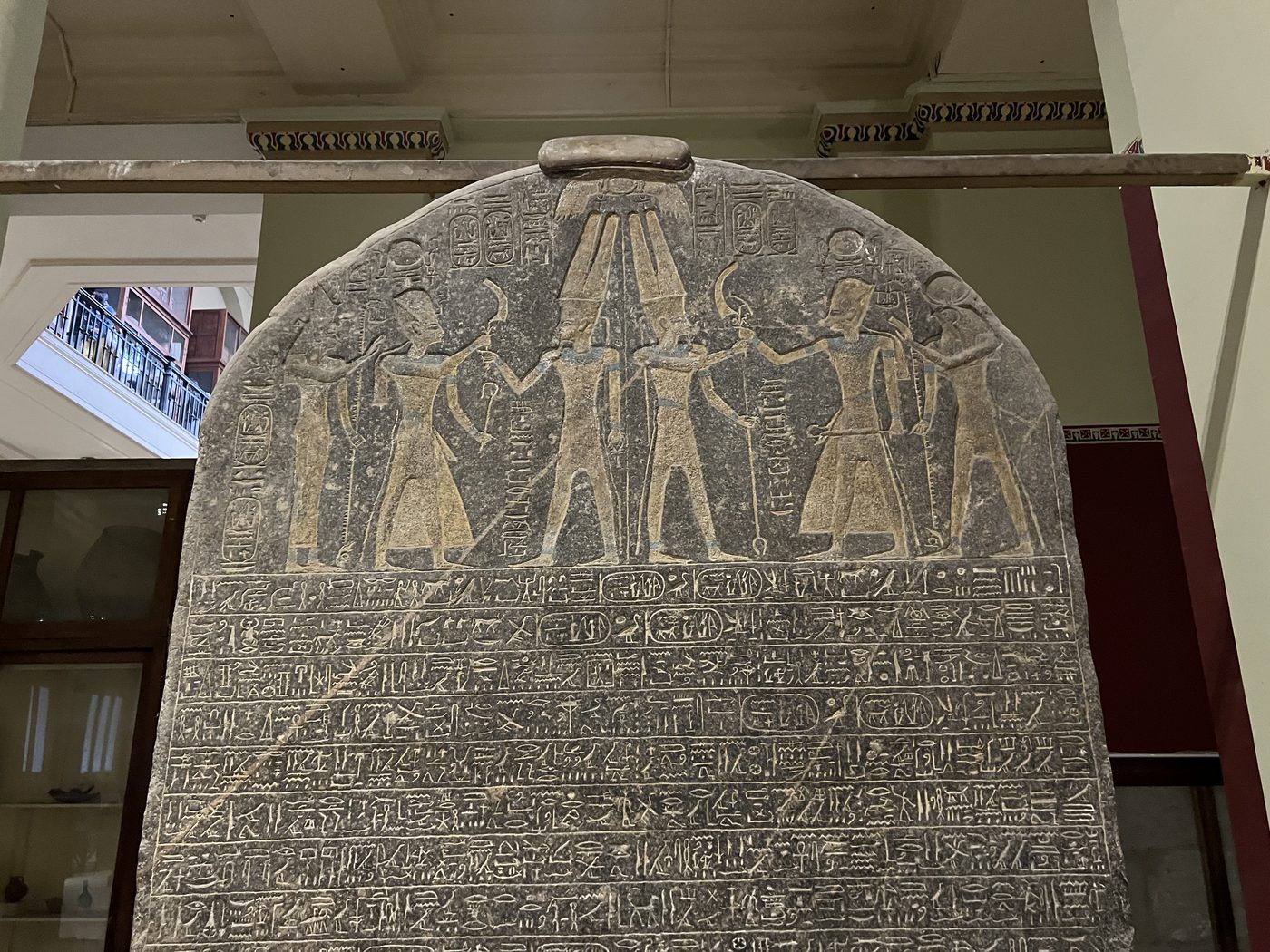
Photo by Onceinawhile, CC BY-SA 4.0
The Crucified Heel Bone (Yehohanan Ossuary)
A 1st-century heel bone discovered in a Jerusalem tomb still had an iron nail driven through it, rare direct physical evidence of Roman crucifixion. The inscribed stone ossuary is original; the heel bone on display today is a replica, since the remains themselves were reburied in the 1980s per Jewish law.
Discovered: 1968, Giv'at ha-Mivtar, northern Jerusalem · Now at: Israel Museum, Jerusalem
Source: Biblical Archaeology Society ↗
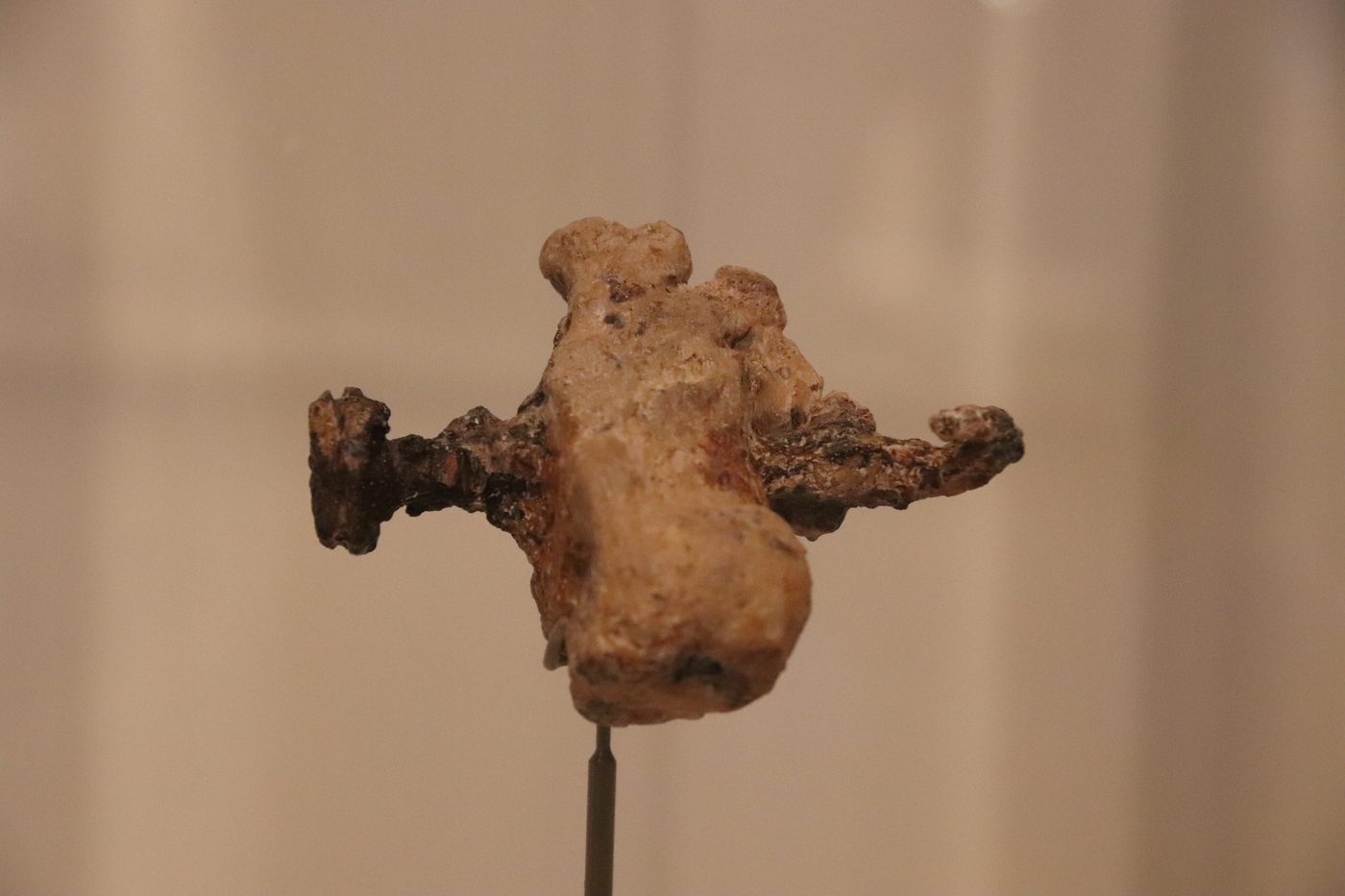
Photo by Gary Todd, CC0
The Ipuwer Papyrus
The Ipuwer Papyrus, an ancient Egyptian text, describes a land in chaos: the river turned to blood, servants rising against masters, darkness over the land, descriptions that echo the plagues of Exodus.
Discovered: Acquired by the Dutch government in 1828; text dated to the 19th Dynasty (c. 1307-1196 BCE) · Now at: Rijksmuseum van Oudheden, Leiden, Netherlands
Source: Wikipedia ↗
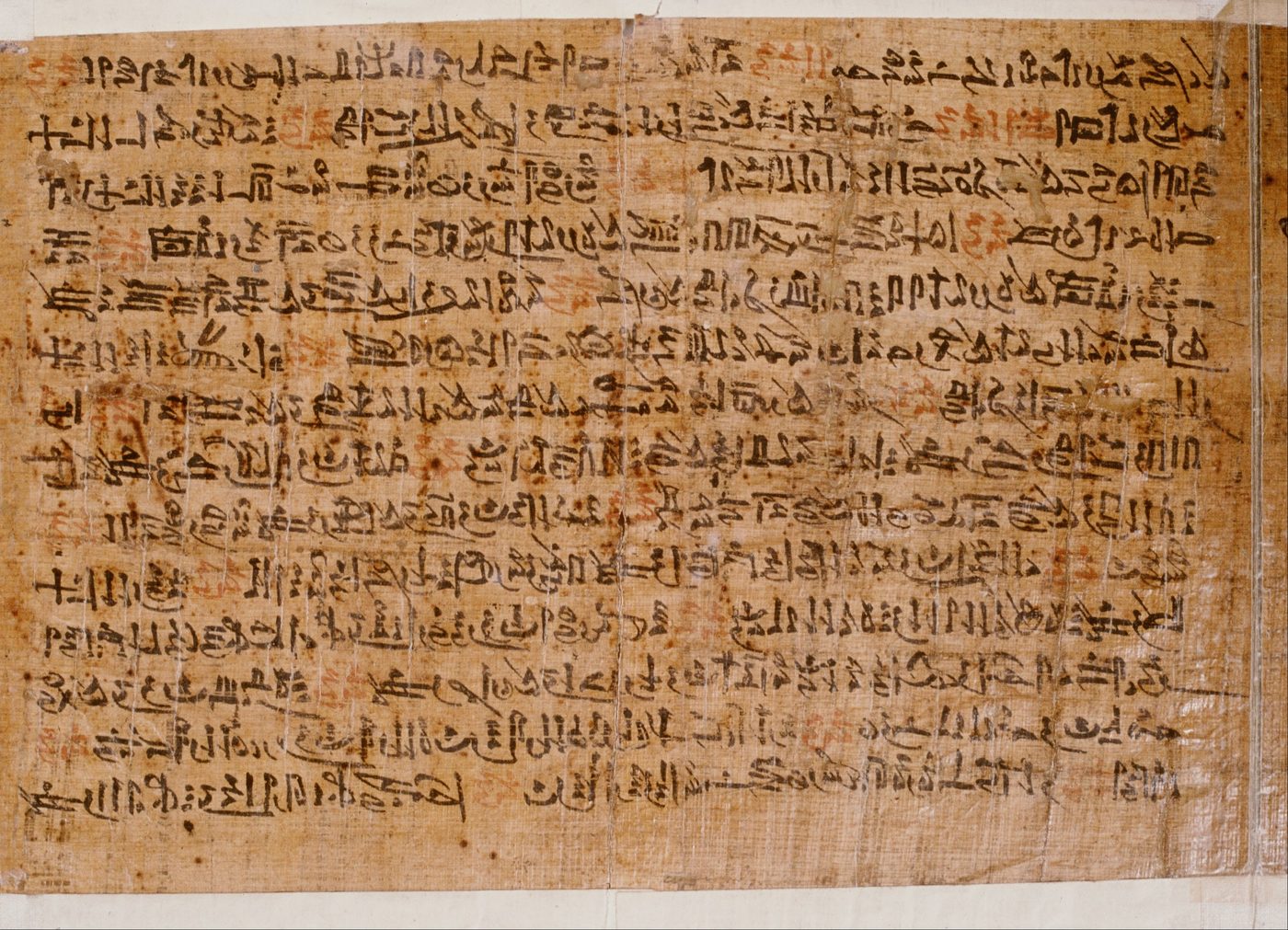
Papyrus Leiden I 344 (Ipuwer Papyrus), via Google Art Project / Rijksmuseum van Oudheden
The Nazareth Inscription
A 1st-century inscription found near Nazareth records an imperial edict threatening death for anyone who disturbs a sealed tomb, from around the same time and region as the resurrection accounts.
Discovered: Acquired 1878, reported from Nazareth; published/identified 1930 · Now at: Louvre Museum (Cabinet des Medailles), Paris
Source: Wikipedia ↗
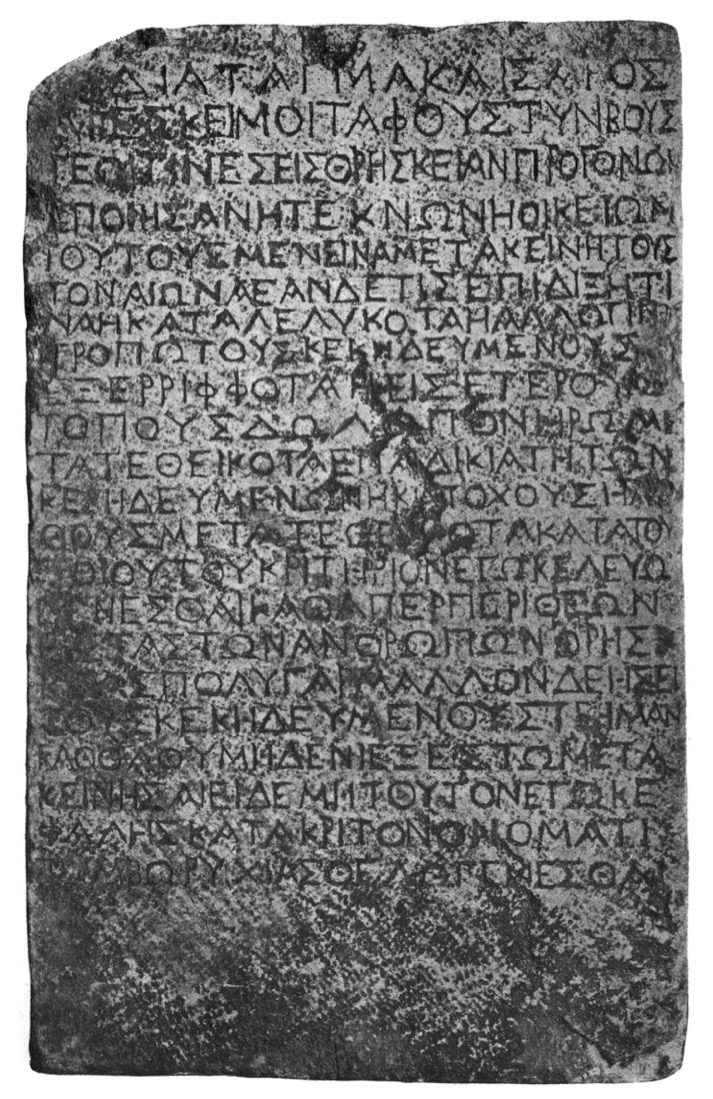
Published in Cumont, F. (1930), Revue Historique 163(2)
The Shroud of Turin
Radiocarbon dating placed the Shroud of Turin's cloth in the medieval period, yet a 2026 textile study found no contamination in the tested fragments, while separate DNA analysis points to Middle Eastern origins. The debate over its age is still very much alive.
Discovered: First documented 1354-1390, Lirey, France; radiocarbon dated 1988 · Now at: Turin Cathedral, Turin, Italy
Source: Encyclopaedia Britannica ↗
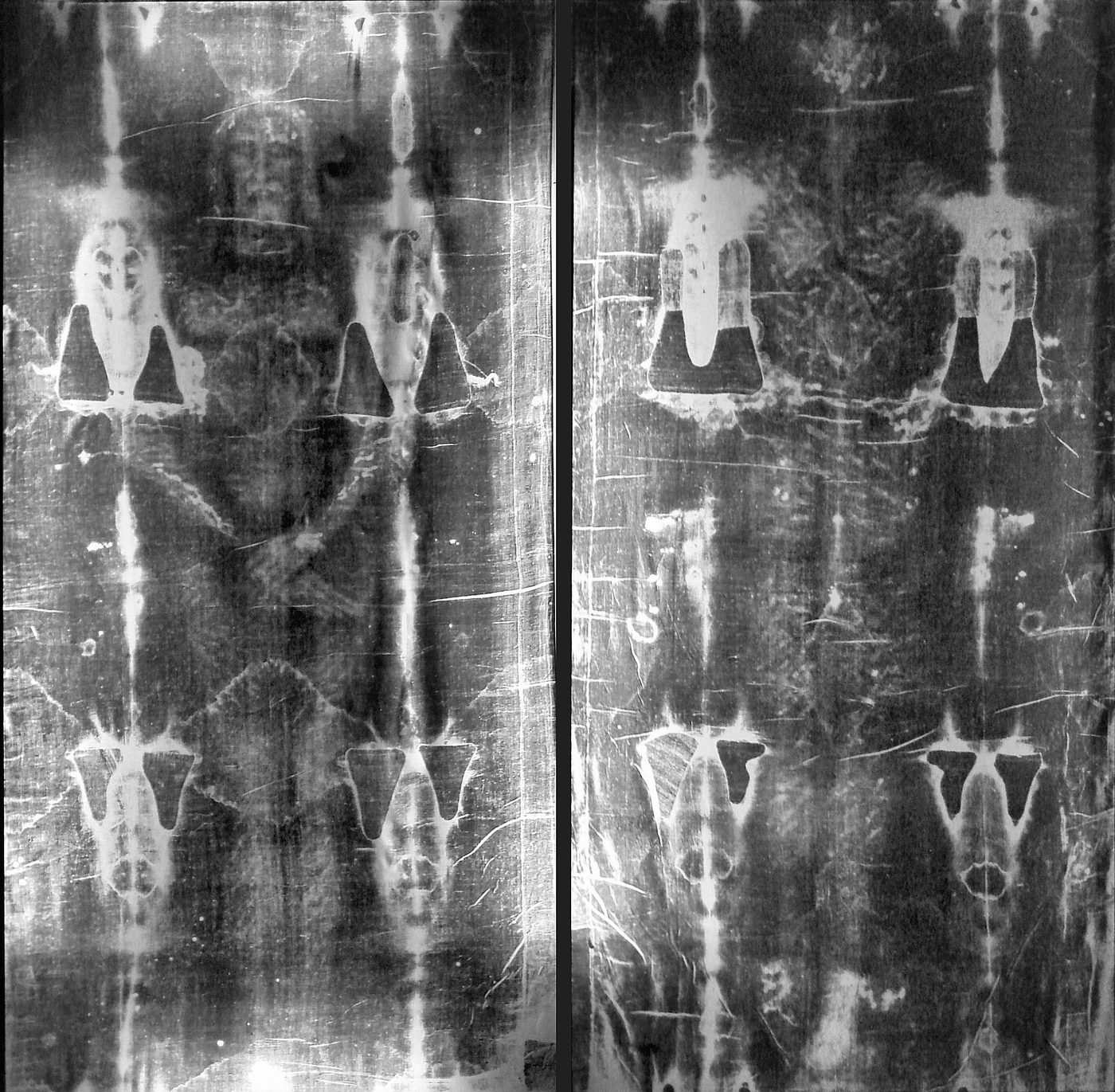
Shroud of Turin (negative image), photographic reproduction via Wikimedia Commons
Tall el-Hammam (Sodom)
Excavations at Tall el-Hammam in modern Jordan uncovered a Bronze Age city destroyed in a single catastrophic event, a leading candidate site for the Sodom described in Genesis 19.
Discovered: Major excavation since 2005, southern Jordan Valley · Now at: In situ, Tall el-Hammam, Jordan
Source: Biblical Archaeology Society ↗
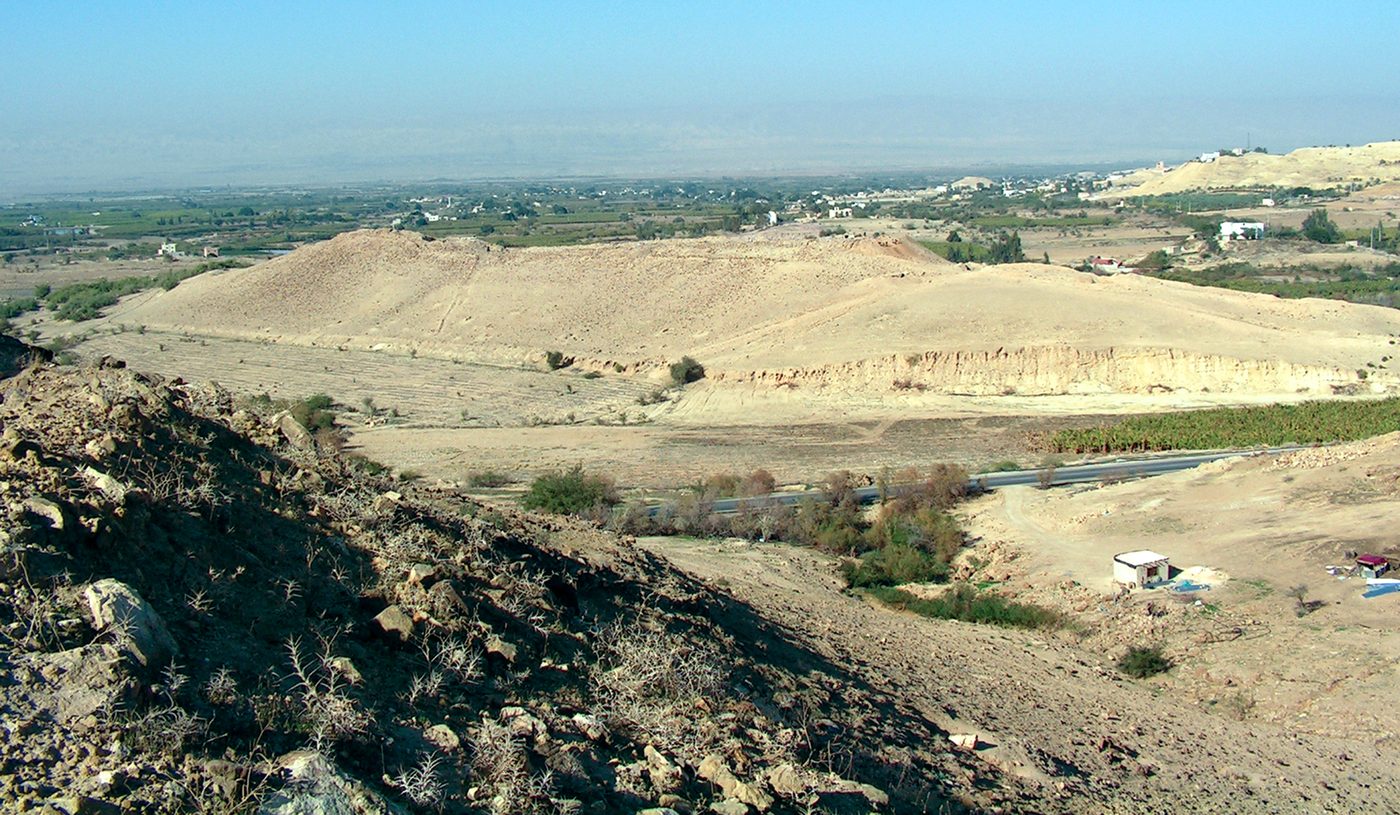
Photo by Deg777, CC BY-SA 4.0
Tell el-Dab'a (Ancient Avaris)
The Book of Exodus places Israel in Goshen during Egypt's collapse; excavations at Tell el-Dab'a, ancient Avaris, reveal a Semitic population living in the eastern Nile Delta during exactly this period.
Discovered: Systematic excavation since the 1960s-80s (Manfred Bietak) · Now at: In situ, Tell el-Dab'a, eastern Nile Delta, Egypt
Source: Wikipedia ↗
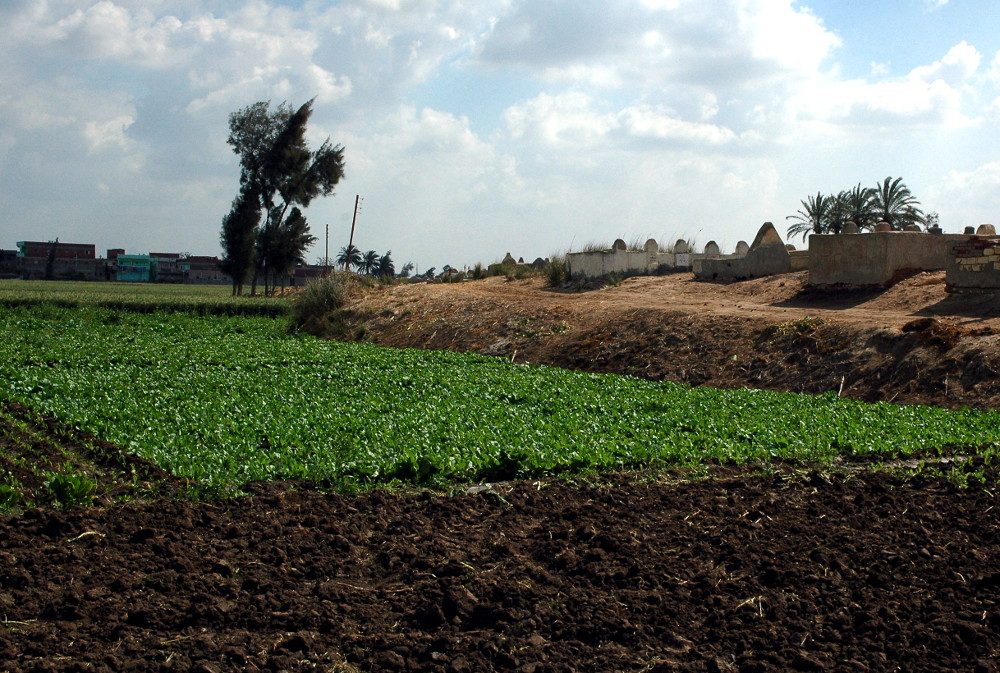
Photo by Didia (David Schmid), CC BY-SA 3.0
The City of David Temple Beams
In July 2026, archaeologists excavating the Givati Parking Lot in Jerusalem's City of David uncovered massive charred sycamore beams from a First Temple-period building, preserved for roughly 2,600 years under melted wall plaster after the roof collapsed in the fire that destroyed Jerusalem in 586 BCE, physical evidence of the Babylonian destruction described in 2 Kings 25 and Jeremiah 52.
Discovered: Announced July 2026, Givati Parking Lot, City of David, Jerusalem (Israel Antiquities Authority and Tel Aviv University excavation) · Now at: Held by the Israel Antiquities Authority / Tel Aviv University excavation team; public display status not yet confirmed
Source: The Times of Israel ↗
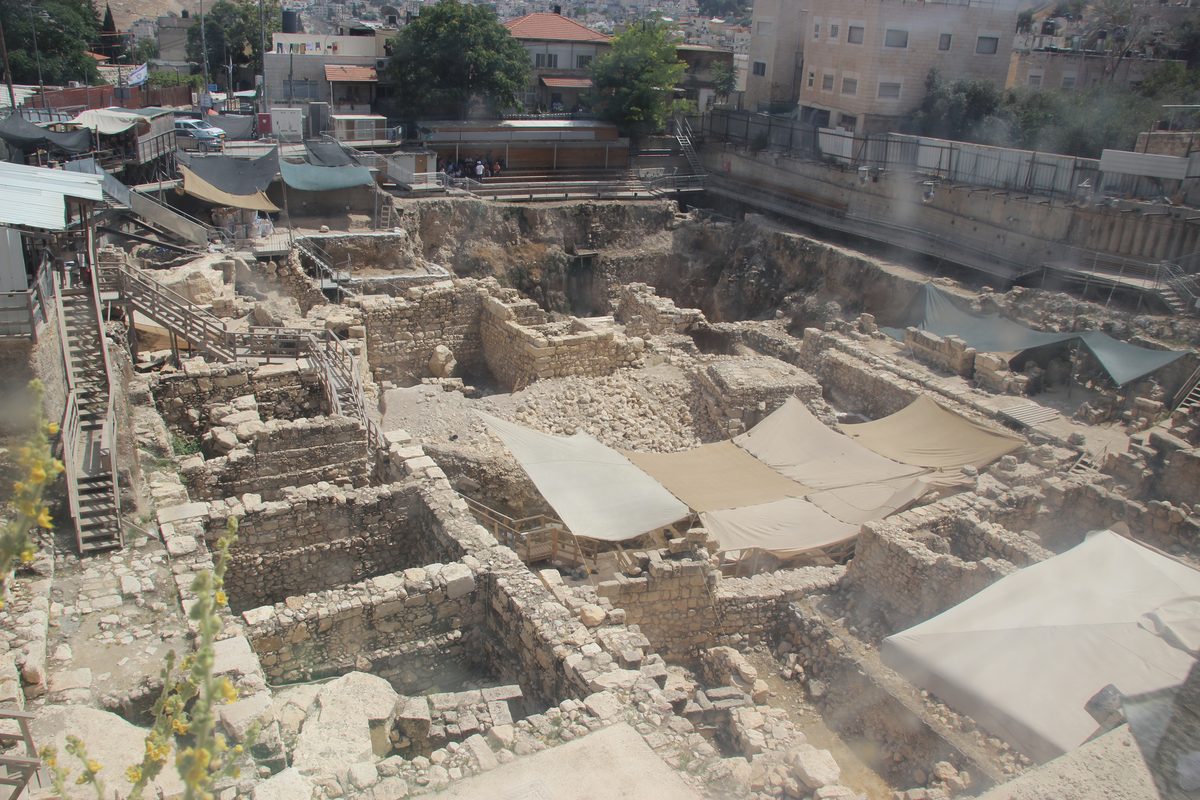
Excavations at the Givati Parking Lot, City of David, Jerusalem (general excavation site, not the beams themselves), photo by Gary Todd, CC0
The Jerusalem Assyrian Tribute Inscription
In October 2025, Israeli archaeologists excavating near Jerusalem's Temple Mount uncovered a tiny inscribed pottery sherd, the first Assyrian cuneiform document ever found in the city. The 2,700-year-old fragment carries a royal Assyrian demand for overdue tribute addressed to an unnamed king of Judah, echoing the biblical accounts of Judah's uneasy tribute relationship with Assyria under kings like Ahaz and Hezekiah.
Discovered: Found ~April 2025 during wet-sifting, announced October 22, 2025, in the archaeological garden near Jerusalem's Western Wall/Temple Mount (IAA excavation with the City of David Foundation) · Now at: Held by the Israel Antiquities Authority; first publicly displayed October 2025 at the Jay and Jeanie Schottenstein National Campus for the Archaeology of the Land of Israel, Jerusalem
Source: The Times of Israel ↗
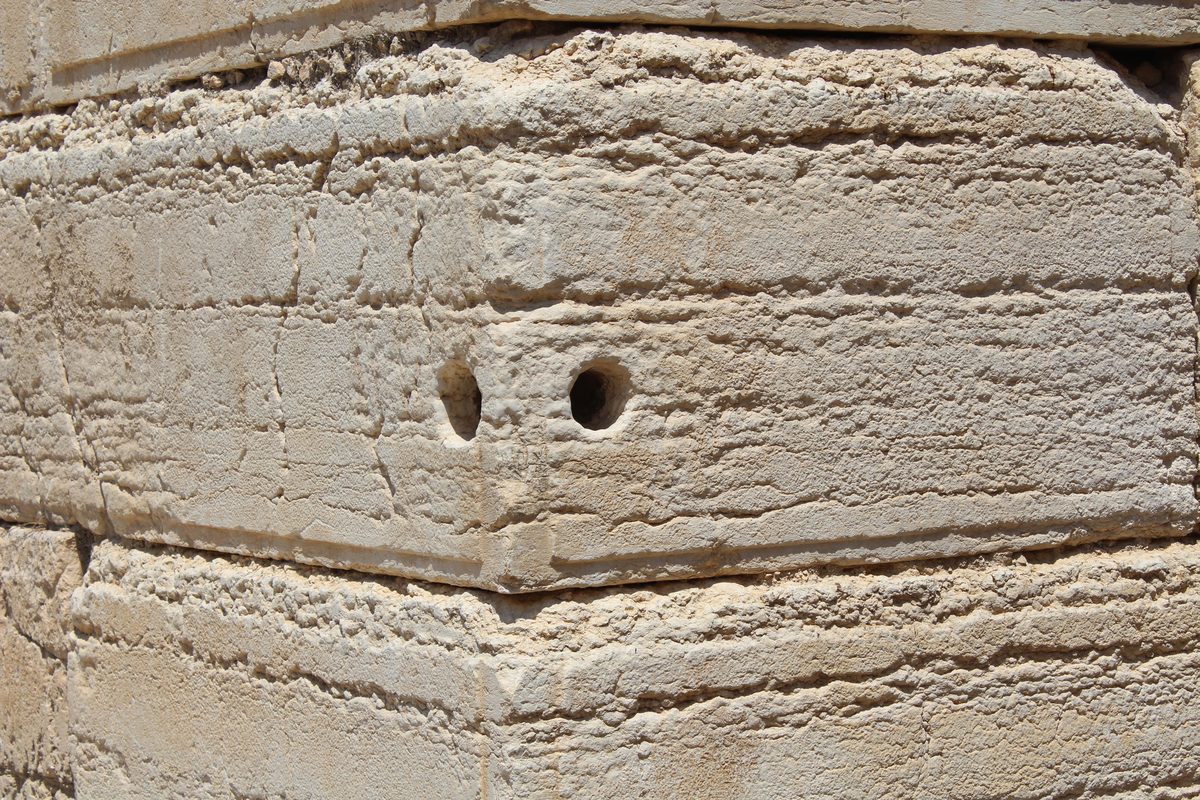
The Davidson Center, Jerusalem Archaeological Park, near where the sherd was found (general excavation site, not the sherd itself), photo by Deror avi, CC BY-SA 3.0
Codex H (Codex Coislinianus)
In 2026, a University of Glasgow-led team used multispectral imaging to recover 42 lost pages of Codex H (Codex Coislinianus), a 6th-century Greek manuscript of Paul's epistles that was taken apart at a monastery on Mount Athos in the 13th century and scattered across libraries in five countries, revealing the earliest known chapter divisions for Paul's letters and new detail on how the early church read and organized the New Testament.
Discovered: Written 6th century CE; disassembled at the Great Lavra Monastery, Mount Athos, in the 13th century; 42 additional pages recovered via imaging and announced April-May 2026 by a University of Glasgow team led by Prof. Garrick Allen · Now at: Surviving fragments held across libraries in Italy, Greece, Russia, Ukraine, and France; a new open-access digital edition was published by the University of Glasgow project
Source: University of Glasgow News ↗
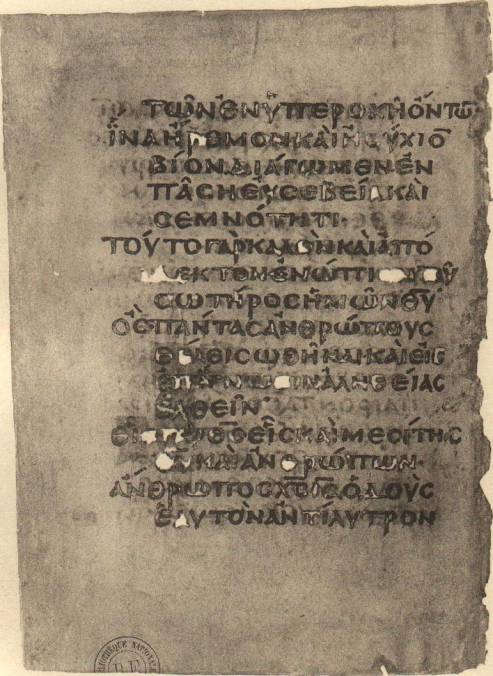
Page from Codex Coislinianus (Uncial 015), 1 Timothy 2:2-6, via Wikimedia Commons
The Ketef Hinnom Silver Scrolls
In 1979, archaeologists excavating burial caves at Ketef Hinnom, just outside Jerusalem's Old City, found two tiny silver amulets inscribed with a version of the priestly blessing from Numbers 6:24-26, the oldest surviving text from the Hebrew Bible ever discovered, predating the Dead Sea Scrolls by roughly 400 years.
Discovered: 1979, Ketef Hinnom burial caves, Jerusalem (excavated by Gabriel Barkay) · Now at: Israel Museum, Jerusalem
Source: Wikipedia ↗
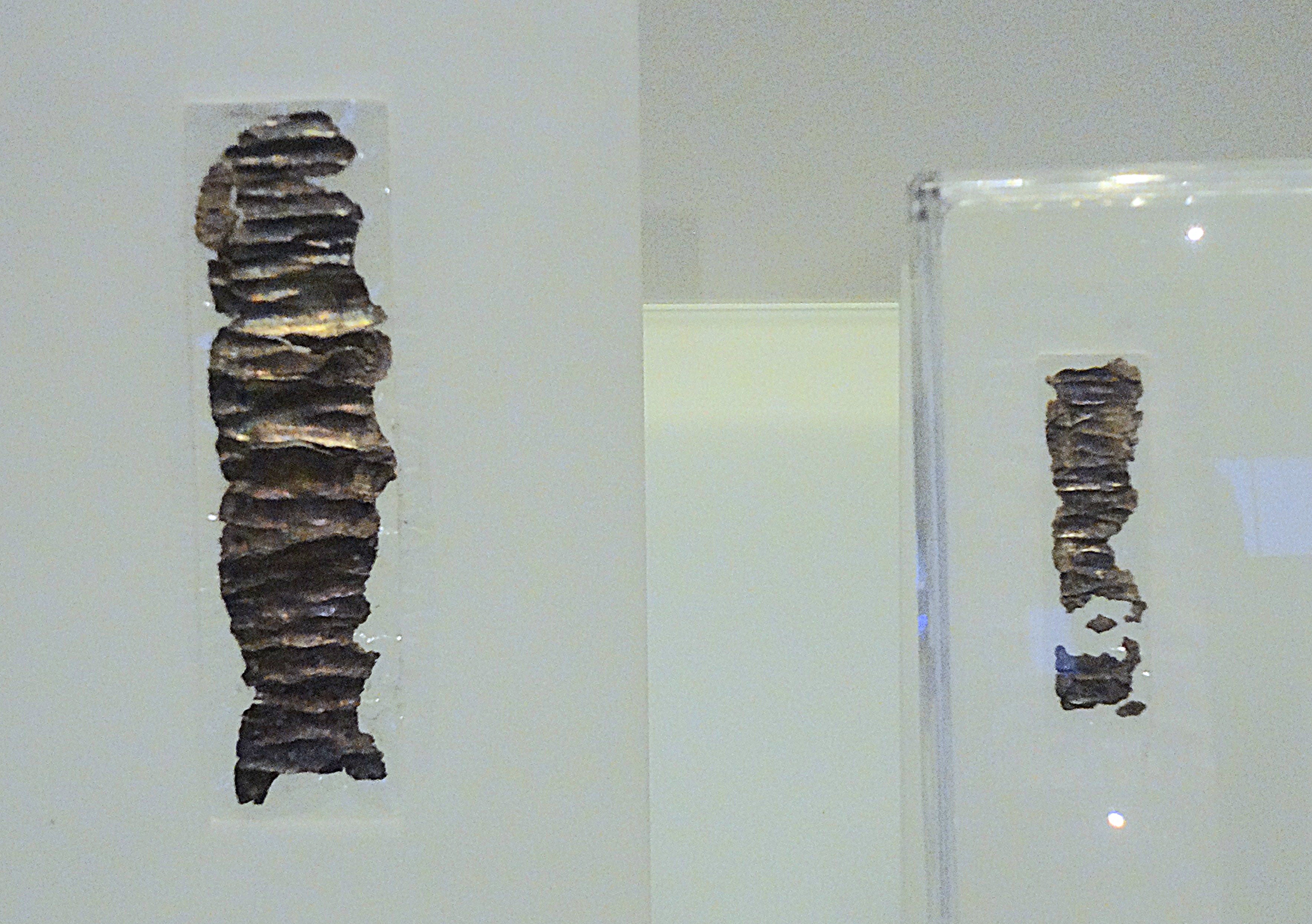
The Silver Scroll on display at the Israel Museum, Jerusalem, via Wikimedia Commons (public domain; original photographer unknown)
The Jerubbaal Inscription
In 2019, archaeologists excavating Khirbat er-Ra'i in Israel's Judean Shephelah uncovered a small storage jug inked with a five-letter proto-Canaanite inscription reading "Jerubbaal," the alternate name the Book of Judges gives the judge Gideon (Judges 6:32). It is the first known appearance of the name Jerubbaal outside the biblical text, though scholars caution the jug's owner may not be the Gideon of scripture given the site's distance from Gideon's home territory.
Discovered: Found 2019, announced July 2021, Khirbat er-Ra'i, Judean Shephelah, Israel · Now at: Held by the excavation team / Israel Antiquities Authority; public display status not confirmed
Source: The Times of Israel ↗
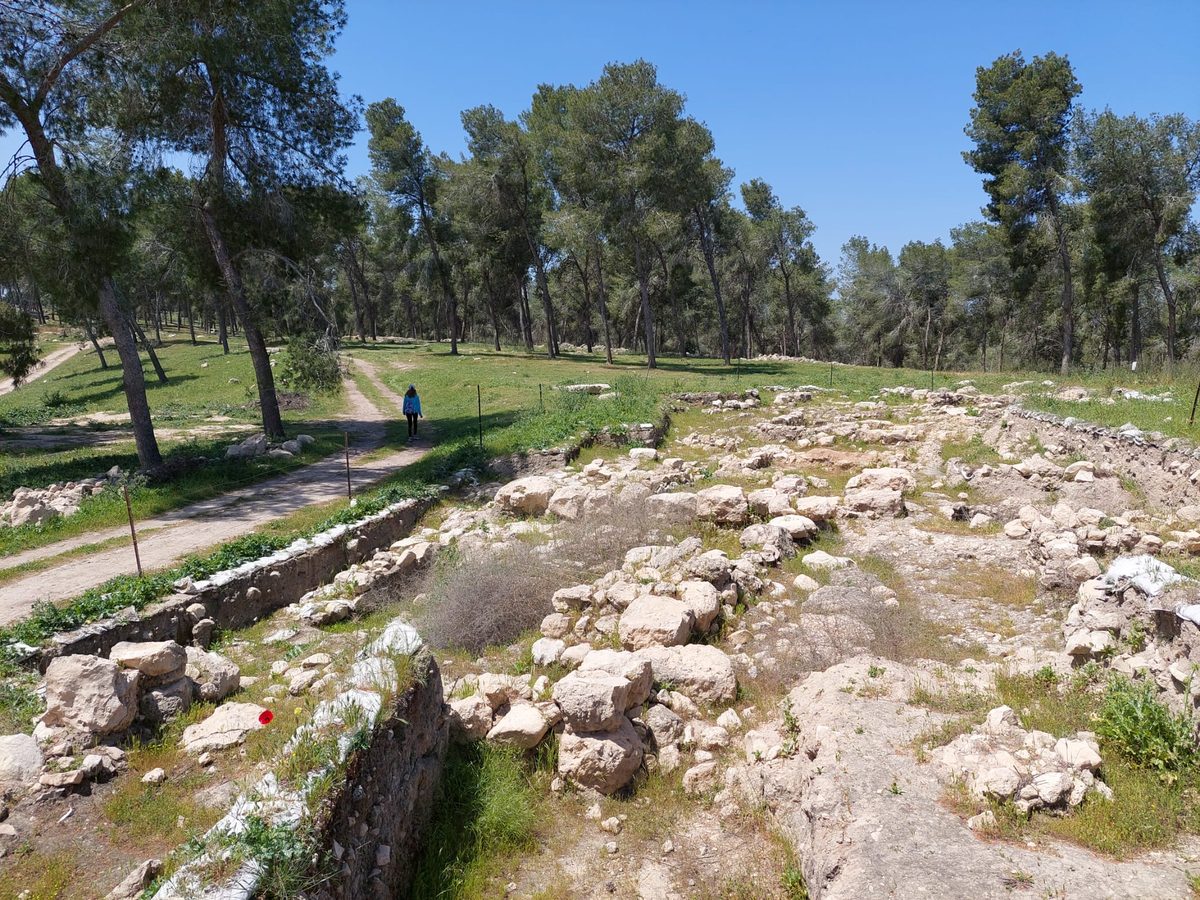
Excavation site at Khirbet er-Ra'i, Judean Shephelah (general site, not the inscribed jug itself), photo by Tombah, CC BY-SA 4.0
The Shamash Gate Destruction Layer (Nineveh)
Between 2021 and 2023, the Iraqi-Italian Nineveh Expedition excavating the Shamash Gate at ancient Nineveh (near Mosul, Iraq) uncovered a destruction layer from 612 BCE, including nearly 200 shattered fragments of a royal stele of King Ashurbanipal, arrowheads, and human remains. The find lines up with the prophets Nahum and Zephaniah, who foretold Nineveh's total destruction before it happened.
Discovered: Excavated 2021-2023, Shamash Gate, Nineveh, near Mosul, Iraq; published 2026 · Now at: Held by the Iraqi-Italian Nineveh Expedition; not on public display (unconfirmed museum placement)
Source: Biblical Archaeology Society ↗
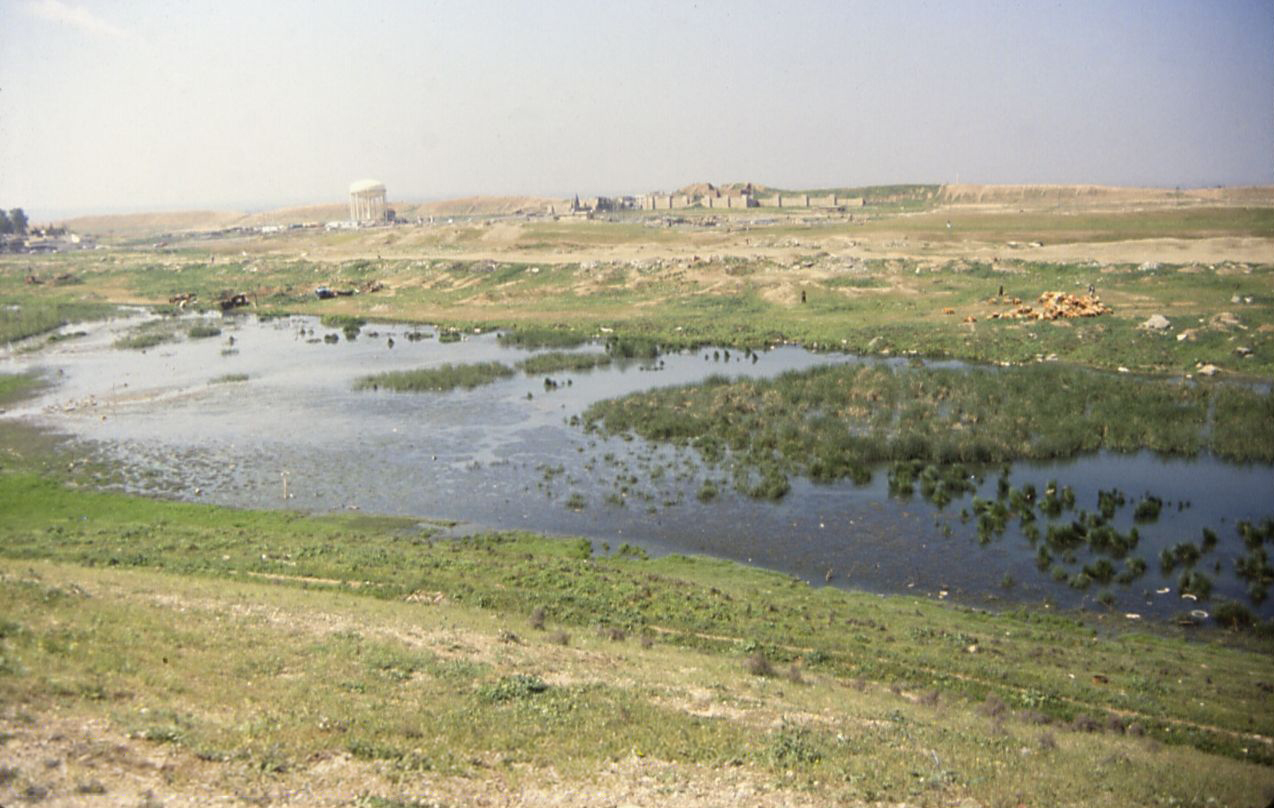
Nineveh's Shamash Gate, photo by Wikimedia user Fredarch, CC BY-SA 3.0