 Kingdom Kutz Media
Prophecy
How Genesis 22 Points to the Cross of Jesus
How the binding of Isaac on Mount Moriah foreshadows the cross: the only son, the wood, the lamb God provides, and the third day.

Would you sacrifice your only child if God asked you to?
That question sits at the center of one of the oldest and most difficult stories in Scripture. It is also, we believe, one of the most carefully constructed. Genesis 22 was never simply a story about one father's obedience. Read closely, it is a blueprint, written two thousand years before the event it points to, of the day God the Father would not spare His own Son.
New to the story itself? Watch our full animated retelling and read the transcript on the Abraham and Isaac Bible story page first, then come back for what it reveals about Jesus.
Bible scholars call this pattern typology, an earlier event in Scripture deliberately foreshadowing a later one. Isaac is one of several "types of Christ" in the Old Testament, and few are this detailed.
Our new film, ABRAHAM AND ISAAC | Full Movie | The Hill Where God Answered Everything, traces that story from the promise to the mountain to the substitute in the thicket. You can watch the complete film here:
👉 https://youtu.be/KrrMeej3uzY
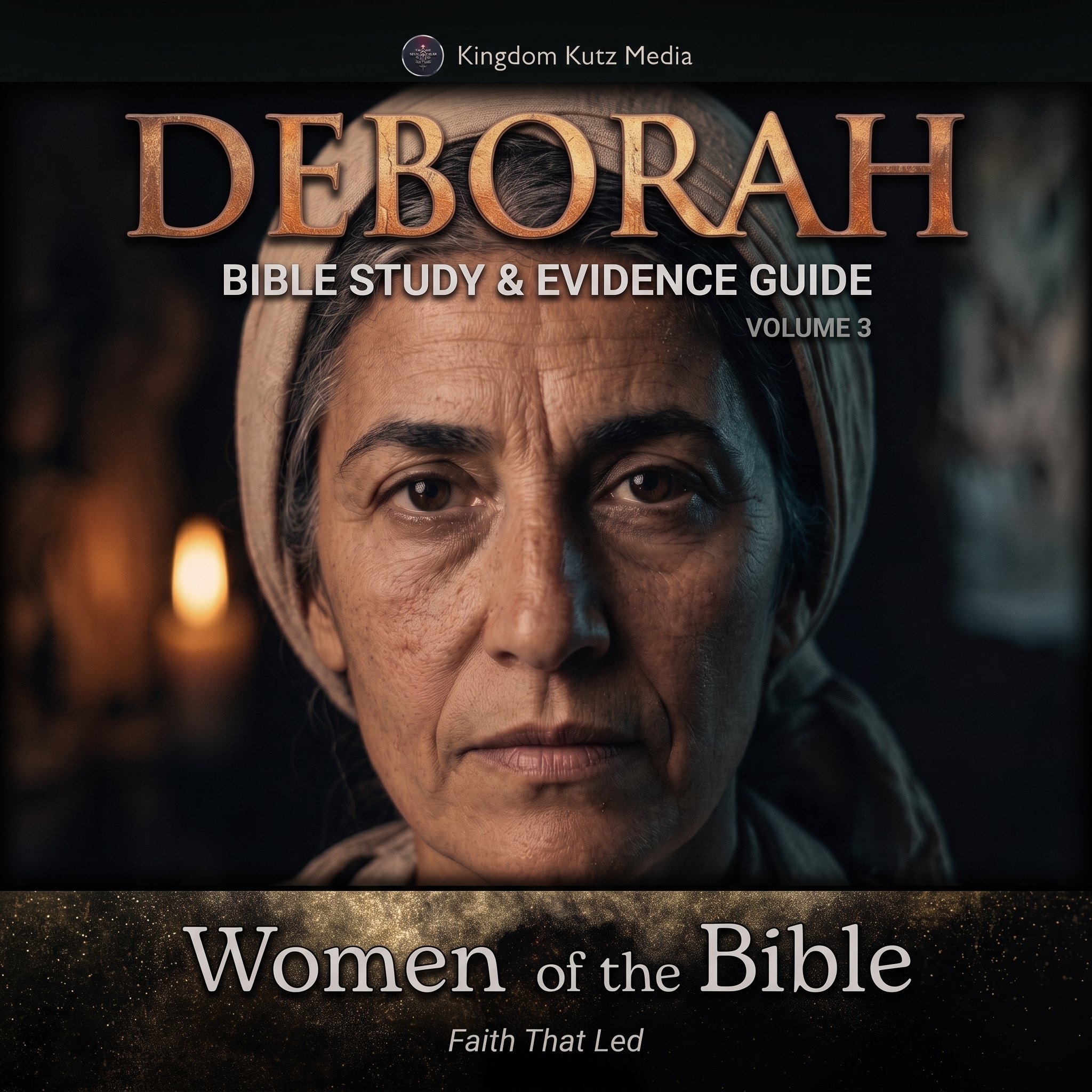
Deborah: Faith That Led
30 pages of real archaeology, Hebrew word study, a 7-day reading plan, and reflection on Deborah's story in Judges 4 and 5.
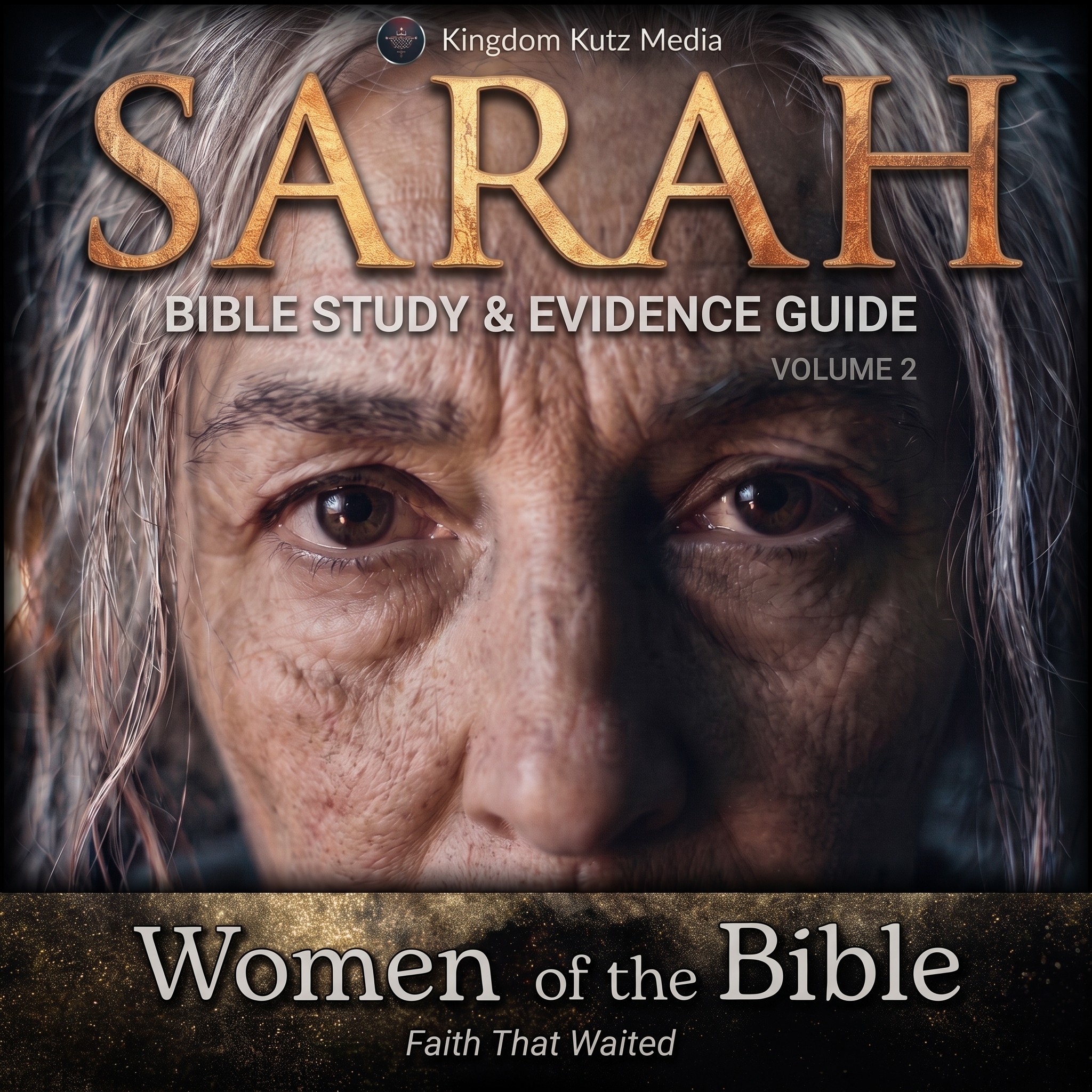
Sarah: Faith That Waited
29 pages of real archaeology, Hebrew word study, a 7-day reading plan, and reflection on Sarah's story in Genesis.
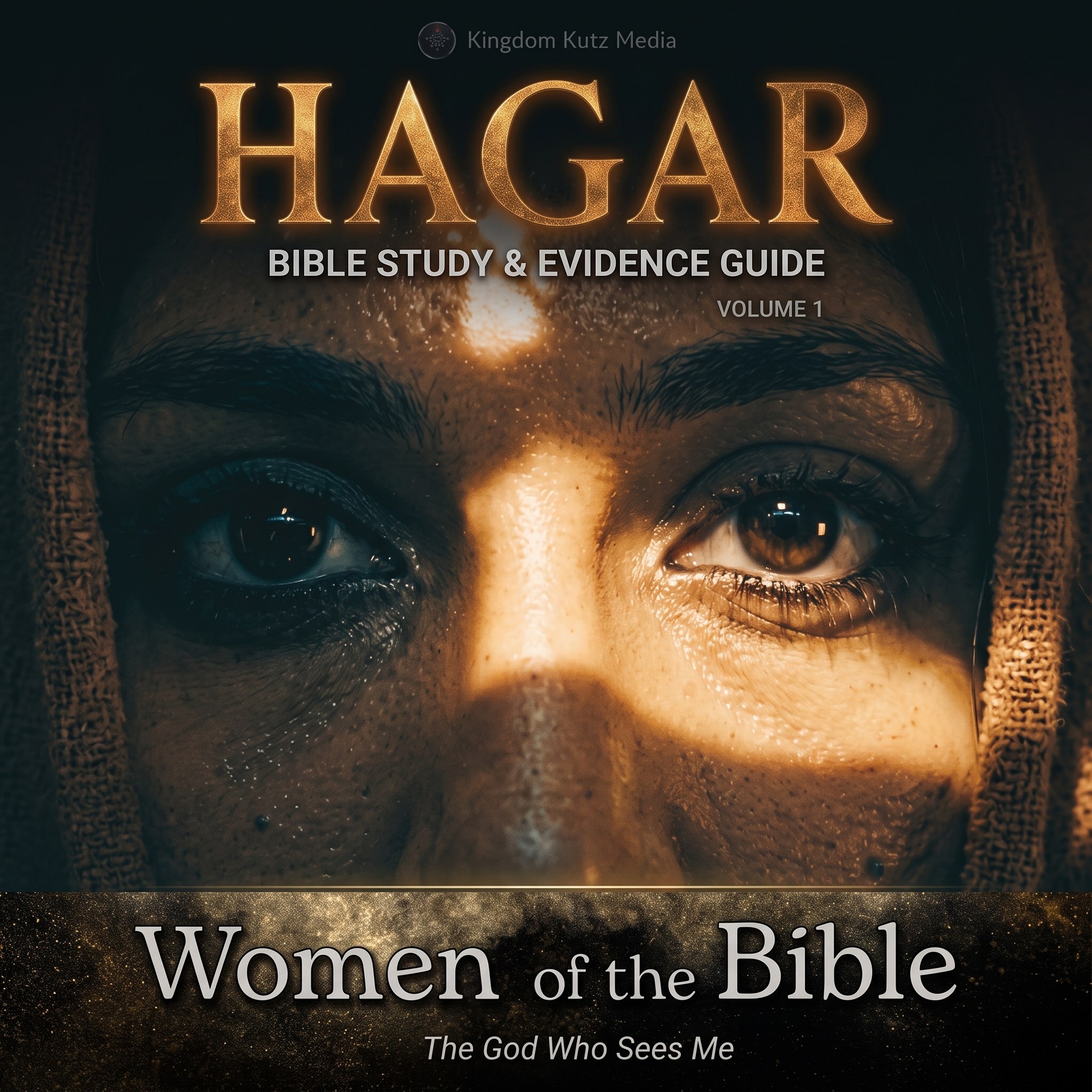
Hagar: The God Who Sees Me
25 pages of real archaeology, Hebrew word study, and reflection on Hagar's story in Genesis.
The Command
Abraham waited a lifetime for a son. He was old, Sarah was old, and the promise God had made decades earlier seemed impossible by any natural measure. Then Isaac was born, and the promise had a name.
Then God spoke again, and this time the command was almost impossible to hold in the mind:
Take now thy son, thine only son Isaac, whom thou lovest, and get thee into the land of Moriah; and offer him there for a burnt offering upon one of the mountains which I will tell thee of.Genesis 22:2 (KJV)
Scripture does not record Abraham arguing. It does not record him bargaining, the way he had bargained with God over Sodom just chapters earlier. Genesis 22:3 simply says he rose early the next morning. That silence is one of the most loaded silences in the Bible.
The Hebrew word used for "only son" here is yachid, a word that stresses uniqueness, one of a kind, irreplaceable. Centuries later, the writer of Hebrews looked back at this moment and used the Greek word monogenes, the same word the Apostle John reaches for when he writes that God gave His "only begotten" Son. That word choice is not a coincidence; it is architecture.
The Three Days
Abraham, Isaac, and two young servants traveled from Beersheba toward the land of Moriah, a journey of roughly eighty kilometers across desert terrain, about three days on foot. We are not told what was said along the way. What we are told is what Abraham said to the servants when the mountain came into view: "I and the lad will go yonder and worship, and come again to you." (Genesis 22:5)
That single sentence carries enormous theological weight. Abraham says both of them will return. The writer of Hebrews later explains why Abraham could say this with confidence: "Accounting that God was able to raise him up, even from the dead; from whence also he received him in a figure." (Hebrews 11:19)
Abraham was not walking toward his son's death in despair. He walked in the certainty that if Isaac died on that mountain, God would raise him. In a very real sense, Abraham was enacting the resurrection before the word existed.
Isaac Carries the Wood
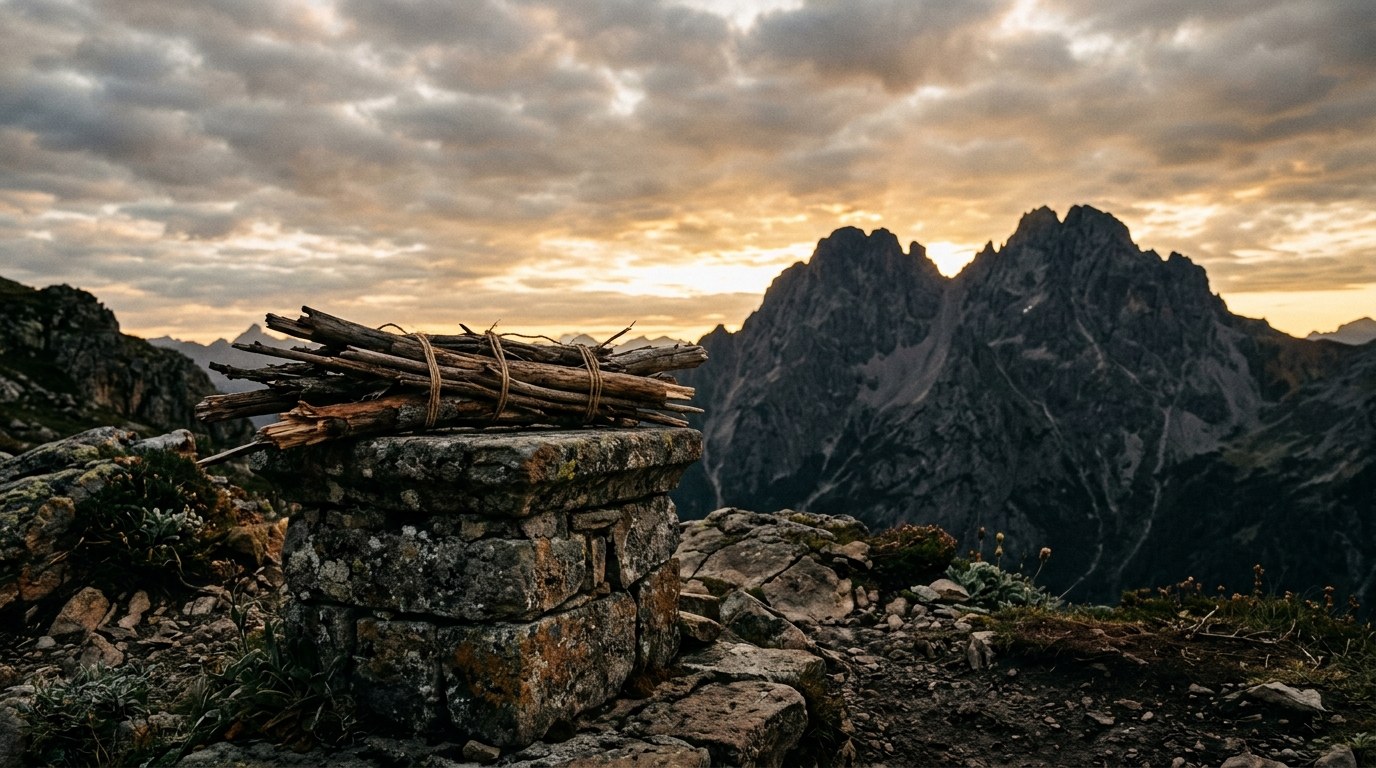
Genesis 22:6 records a detail easy to pass over: "Abraham took the wood of the burnt offering, and laid it upon Isaac his son." Isaac carried the wood of his own sacrifice up the mountain.
Isaac was not a small child. Scripture never gives his exact age, but he was clearly strong enough to carry timber up a mountainside, and fully capable of resisting an elderly father. He did not resist. Genesis 22:6 and again in verse 8 repeats the same phrase: "so they went both of them together." The narrator seems to want us to feel the weight of a son who understood what was happening and walked forward anyway.
"Where Is the Lamb?"
Halfway up the mountain, Isaac asks the question the whole film turns on: "My father... Behold the fire and the wood: but where is the lamb for a burnt offering?" (Genesis 22:7)
Abraham's answer is one of the most quietly staggering lines in the Old Testament: "My son, God will provide himself a lamb for a burnt offering." (Genesis 22:8)
Some Hebrew scholars note the phrase can also be read: God will provide Himself as the lamb. Abraham likely did not grasp the full weight of what he had just said. Two thousand years later, a man named John would stand at the Jordan River, point to someone walking toward him, and answer the question Isaac had asked on that hillside: "Behold the Lamb of God, which taketh away the sin of the world." (John 1:29)
The Altar, the Knife, and the Substitute
At the summit, Abraham built the altar, arranged the wood, bound his son, and laid him upon it. He stretched out his hand and took the knife. Then: "The angel of the LORD called unto him out of heaven, and said, Abraham, Abraham... Lay not thine hand upon the lad, neither do thou any thing unto him: for now I know that thou fearest God, seeing thou hast not withheld thy son, thine only son from me." (Genesis 22:11-12)
Abraham lifted his eyes and saw a ram caught by its horns in a thicket nearby, an innocent creature dying in the place of the beloved son so the beloved son could live. Abraham named that place Jehovah-Jireh, "The LORD will provide," and spoke a proverb Israel would carry for generations: "In the mount of the LORD it shall be seen." (Genesis 22:14)
He did not yet know what would be seen there.
The Prophecies Written Centuries Before
Seven hundred years before the crucifixion, the prophet Isaiah described a suffering servant, "despised and rejected of men... wounded for our transgressions, bruised for our iniquities... brought as a lamb to the slaughter." (Isaiah 53:3-7) Isaiah 53 is not symbolic poetry. It is a description written centuries before the events it describes, with specific, verifiable detail that the Gospel accounts match point by point.
A thousand years before the crucifixion, King David opened Psalm 22 with the words Jesus would later cry from the cross: "My God, my God, why hast thou forsaken me?" The psalm continues into territory that should have been impossible for its time, describing pierced hands and feet, visible bones, and enemies casting lots for a dying man's garments, roughly six hundred years before crucifixion was ever recorded as a method of execution. In Jewish tradition, quoting the opening line of a psalm invoked the entire psalm. When Jesus spoke those words from Golgotha, He was not losing faith. He was announcing, in the hearing of everyone present, that the psalm David wrote a thousand years earlier was being fulfilled in that exact moment, on that exact hill.
From Moriah to Golgotha
Golgotha sits within the broader region Scripture calls Moriah, within walking distance of the Temple Mount, on ground Abraham once walked with his son, alive, on the way down. The stage had been set four thousand years before the curtain rose.
Jesus carried His own wood up His own hill, just as Abraham had laid the wood on Isaac's back. He was bound and fixed to it, just as Isaac had been bound and placed on the altar. Two disciples who could not follow Him stood at a distance, just as the two servants had waited at the foot of the mountain while father and son climbed alone.
And when the moment came, no angel called from heaven. No voice said stop. No substitute appeared in a thicket.
Because this time, He was the substitute. Not for one son, but, as Scripture puts it, for every human being who has ever drawn a breath.
The Answer
Abraham named that mountain "The LORD will provide," and said it more truly than he knew. What was provided there was not only a ram in a thicket. It was the answer to Isaac's question on the hillside, the fulfillment of Isaiah's servant song, the completion of David's psalm, and the Lamb of God carrying His own wood, going willingly, dying as a substitute for all.
God did not only ask Abraham whether he would give up his only son. God asked, and answered, the same question of Himself, on a hill in the region of Moriah, with His own only begotten Son.
Key Takeaways
- Genesis 22 records Abraham's near-sacrifice of Isaac on Mount Moriah, a story built on typology that points forward to the crucifixion.
- Isaac carried the wood of his own sacrifice up the mountain, just as Jesus carried His own cross up Golgotha, within the same broader region called Moriah.
- The Hebrew word for Isaac as Abraham's "only son" (yachid) echoes the Greek word (monogenes) John later uses for Jesus as God's "only begotten" Son.
- Isaiah 53, written seven centuries before the crucifixion, and Psalm 22, written a thousand years before and centuries before crucifixion existed as a method of execution, both describe details later fulfilled in Jesus's death.
- A ram substituted for Isaac at the altar on Moriah. At the cross, no substitute appeared, because Jesus Himself became the substitute, for everyone.
The film brings this whole story to life, from the promise to the mountain to the cross.
👉 Watch ABRAHAM AND ISAAC | Full Movie | The Hill Where God Answered Everything: https://youtu.be/KrrMeej3uzY
If this story moved you, subscribe to Kingdom Kutz Media for more cinematic biblical films grounded in Scripture. Ancient truth. Modern edits. Real faith.
What do you intend to do with the answer?
🙏 Pray With Us
Lord, when You ask something of us that feels impossible to hold, give us Abraham's kind of trust, the kind that rises early instead of arguing. Thank You that You did not only ask this of him. You answered it Yourself, in Your own Son, so none of us would have to wonder if the mountain would end in mercy.

The Book of Enoch: What Genesis Isn't Telling You About the Watchers ft @WhatTheBibleSaysaboutkkm
▶ Watch NowSources
Popular right now: Why Does the Bible Say Not to Eat Pork?
Support Our Mission
If these stories strengthen your faith, help us keep making them, every gift goes directly into producing more Bible stories, evidence, and prophecy content.
❤ Support Our WorkMore from Kingdom Kutz Media: All news · Daily Bible Verse · Our YouTube channel
Comments
Loading comments...