 Kingdom Kutz Media
Archaeology
Aqueduct That Fed the Temple Mount Uncovered in Jerusalem
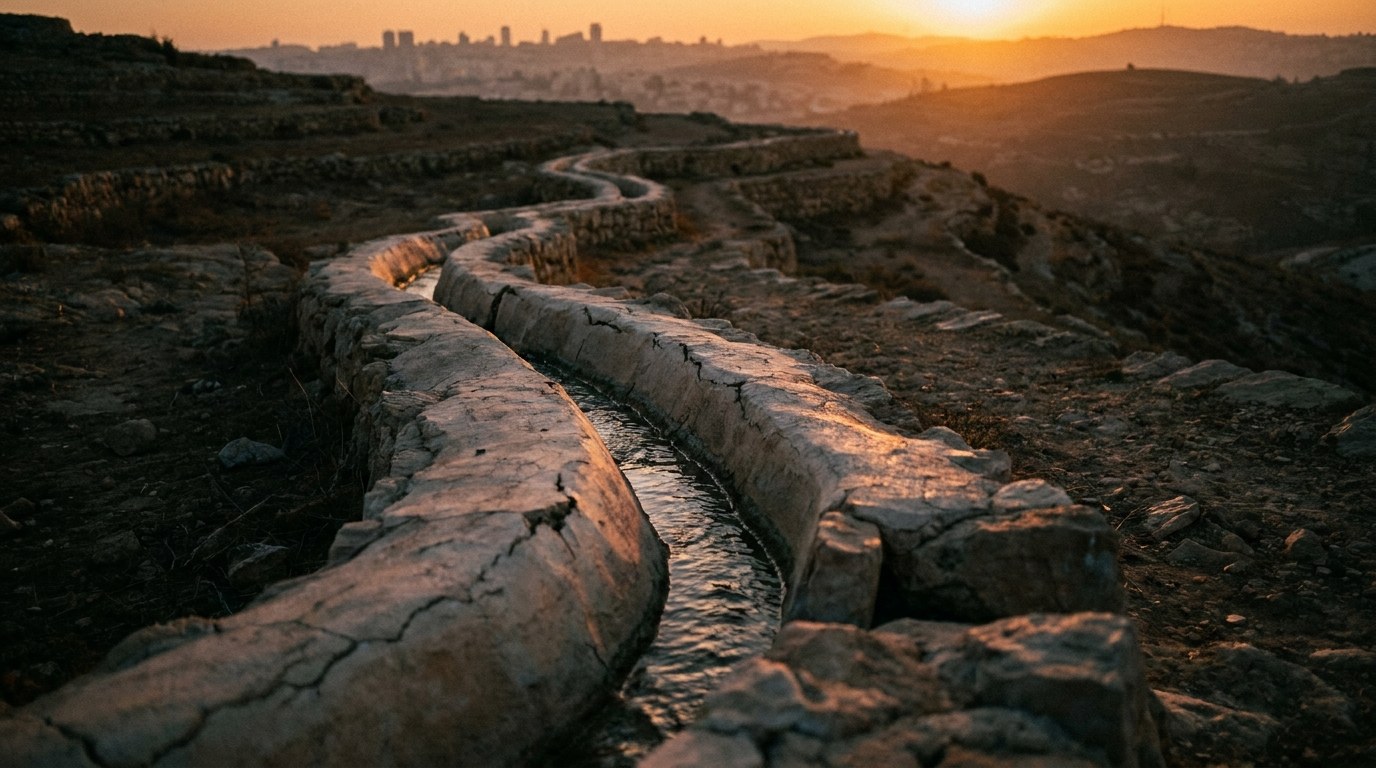
Israeli archaeologists exposed a 300-meter stretch of Jerusalem's Lower Aqueduct, the gravity-fed channel that carried spring water to the Temple Mount for centuries.

Photo: Djampa, CC BY-SA 4.0, via Wikimedia Commons (Lower Aqueduct at Armon Hanatziv, an earlier excavated section, cropped, masthead added)
Water is the first problem any city on a ridge has to solve. Jerusalem sits high in the Judean hills with almost no springs of its own, yet the Temple at its center needed water every single day for washing, sacrifices, and the crowds of pilgrims at every feast. This week Israeli archaeologists showed off part of the answer: a 300-meter section of the Lower Aqueduct, uncovered south of Kibbutz Ramat Rachel in southern Jerusalem.
What the excavators found
The Israel Antiquities Authority dug the site ahead of a planned residential neighborhood, with the work funded by the Israel Land Authority. Excavation directors Dr. Benyamin Storchan and Gil Fried exposed a long run of the channel: a wall built of two rows of stones with a U-shaped, plaster-lined watercourse inside, probably once covered by stone slabs. The Times of Israel reports the builders cut tunnels through hills wherever looping around them would have cost too much slope.
And slope was everything. The full aqueduct ran about 21 kilometers from the springs near Solomon's Pools, south of Bethlehem, to the Temple Mount. It used no pumps. The water dropped roughly one meter for every kilometer it traveled, a gradient so gentle the surveyors had to get it right across miles of rocky, uneven ground. Inspection points along the line let workers clear blockages.
The channel had a long working life. About 500 years ago, during the Ottoman period, crews laid a ceramic pipe inside the original watercourse, and the system ran on and off until about a century ago. IAA Jerusalem District director Dr. Amit Re'em called it "an engineering marvel," according to Ynet.
How old is it, and how sure are they?
The excavators date the aqueduct to the Hasmonean kings, the Jewish dynasty that ruled Judea in the century or so before Herod the Great. Most reports place the original construction around 100 BC. A note on the evidence: the press materials describe the Hasmonean date as the team's assessment, and they don't spell out the dating method for this particular section. The full findings get their first public presentation this week at the annual New Studies in the Archaeology of Jerusalem and Its Region conference, so expect more detail soon.
What isn't in doubt is the route or the destination. This channel brought water to the Temple Mount. Only about 2 kilometers of the 21-kilometer line have ever been excavated, which makes a fresh 300-meter stretch a big addition. The IAA plans to build it into the entrance of the new neighborhood, visible from every side, as part of a longer goal: a continuous walking park along the aqueduct from southern Jerusalem to the Old City.
Why Bible readers should care
If the Hasmonean date holds, this aqueduct was already about a century old when Jesus walked into the Temple courts. The water flowing through it is part of how the Temple functioned during the Gospel accounts. Last week we covered the pilgrim ritual baths uncovered at the foot of the Temple Mount, and the two finds fit together. Feast crowds needed purification, and purification needed water.
The Gospel of John records Jesus standing up on the last great day of the Feast of Tabernacles and offering a different kind of water. He spoke those words in a Temple courtyard supplied by channels like this one, to people who knew exactly how much effort it took to get water into that city.
In the last day, that great day of the feast, Jesus stood and cried, saying, If any man thirst, let him come unto me, and drink. He that believeth on me, as the scripture hath said, out of his belly shall flow rivers of living water.John 7:37-38 (KJV)
Two honest footnotes. Solomon's Pools carry Solomon's name by long tradition, and Ecclesiastes 2:6 does mention him making pools of water, but no excavation has tied those specific reservoirs to his reign. Also, the first-century historian Josephus writes that Pontius Pilate spent Temple money on an aqueduct into Jerusalem. Scholars still debate whether Pilate built a new line or repaired and extended this older one.
Jerusalem's ground keeps handing back pieces of the world the Bible describes. In our video Is the Bible Real? 10 Ancient Finds, we walk through another discovery from the same city: the heel bone of a crucified man, still pierced by a Roman nail, found in a first-century Jerusalem tomb. It's physical proof the execution method described in the Gospels left marks on real bodies. The video also covers the Tel Dan Stele naming the House of David and the Mt. Ebal lead tablet. You'll find more finds like these on our biblical evidence page.

Deborah: Faith That Led
30 pages of real archaeology, Hebrew word study, a 7-day reading plan, and reflection on Deborah's story in Judges 4 and 5.

Sarah: Faith That Waited
29 pages of real archaeology, Hebrew word study, a 7-day reading plan, and reflection on Sarah's story in Genesis.

Hagar: The God Who Sees Me
25 pages of real archaeology, Hebrew word study, and reflection on Hagar's story in Genesis.
Key Takeaways
- The Israel Antiquities Authority exposed a 300-meter section of Jerusalem's Lower Aqueduct south of Kibbutz Ramat Rachel.
- The 21-kilometer channel carried spring water from near Solomon's Pools to the Temple Mount using gravity alone, dropping about one meter per kilometer.
- Excavators date it to the Hasmonean kings, around 100 BC. The full findings will be presented at a Jerusalem archaeology conference this week.
- Ottoman crews later added a ceramic pipe, and the line worked on and off until about 100 years ago.
- The section will be preserved at the entrance of a new neighborhood, part of a planned walking park reaching the Old City.
Every stone in that channel was set by someone who believed water could reach God's house if they got the slope right. Thousands of years later, the One who stood in that house still says the same thing to every thirsty soul: come and drink.
🙏 Pray With Us
Lord, let the evidence coming out of the ground in Jerusalem open hearts to the truth of Your Word. Draw everyone who reads about this find to the living water only You can give.

The Book of Enoch: What Genesis Isn't Telling You About the Watchers ft @WhatTheBibleSaysaboutkkm
▶ Watch NowPopular right now: Why Does the Bible Say Not to Eat Pork?
Support Our Mission
If these stories strengthen your faith, help us keep making them, every gift goes directly into producing more Bible stories, evidence, and prophecy content.
❤ Support Our WorkMore from Kingdom Kutz Media: All news · Daily Bible Verse · Our YouTube channel
Comments
Loading comments...