 Kingdom Kutz Media
Prophecy
Daniel's 70 Weeks: The 2,500-Year-Old Countdown Scholars Still Can't Agree On
Daniel 9 lays out a literal, numbered countdown running toward Messiah the Prince, and four serious schools of biblical scholarship still land in four different places.

Most Bible prophecy gets treated like poetry. Daniel 9 is not that. It hands you actual numbers: a starting decree, a unit of measurement, and a running total. Twenty five hundred years later, historians and theologians are still doing that math, and they are still not agreeing on the answer.
Our new video, Why Daniel 9 Is Structured Like a Countdown, walks through the real decrees, calendars, and archaeology behind those numbers, no dramatization, just the actual artifacts still standing today. Here is the shape of the countdown and why it still divides careful scholars.

Deborah: Faith That Led
30 pages of real archaeology, Hebrew word study, a 7-day reading plan, and reflection on Deborah's story in Judges 4 and 5.

Sarah: Faith That Waited
29 pages of real archaeology, Hebrew word study, a 7-day reading plan, and reflection on Sarah's story in Genesis.

Hagar: The God Who Sees Me
25 pages of real archaeology, Hebrew word study, and reflection on Hagar's story in Genesis.
What Does Daniel 9 Actually Say?
The core prophecy sits in four dense verses. Speaking through the angel Gabriel, God tells Daniel that seventy weeks, meaning seventy sets of seven years, are set over Jerusalem and its people. That is 490 years total, broken into three blocks: seven weeks, sixty two weeks, and one final week.
Know therefore and understand, that from the going forth of the commandment to restore and to build Jerusalem unto the Messiah the Prince shall be seven weeks, and threescore and two weeks: the street shall be built again, and the wall, even in troublous times.Daniel 9:25 (KJV)
Sixty nine of those seventy weeks, 483 years, run from a decree to rebuild Jerusalem's street and wall up to Messiah the Prince. The final week is described separately, tied to a covenant, a sacrifice that gets cut off midweek, and an act of desolation. Read it slowly. Every phrase in it has been argued over for centuries.
Why Was Daniel Counting in the First Place?
Daniel was not inventing a countdown out of nowhere. He was doing the math on somebody else's prophecy. He tells us directly that he had been reading the book of Jeremiah and realized the seventy years Jeremiah predicted for Jerusalem's desolation were nearly finished. Jeremiah had written that the nations would serve Babylon for seventy years, and Daniel, an old man by then, checked the calendar against that number. That is what sent him into the prayer that fills most of chapter 9, before Gabriel ever shows up with the new seventy weeks answer.
Which Decree Starts the Clock?
This is where the real disagreement begins. Daniel 9:25 starts the countdown at the going forth of a commandment to rebuild Jerusalem, its street and its wall specifically. Two Persian decrees are candidates. Cyrus the Great issued one in 538 BC, recorded in the book of Ezra, authorizing the Jewish exiles to rebuild the temple. His own account of taking Babylon survives on the Cyrus Cylinder, still on display in the British Museum. But that decree is about the temple, a house of worship, not the city itself. The other candidate is Artaxerxes' decree in 445 BC, recorded in Nehemiah 2, which specifically authorizes rebuilding Jerusalem's street and wall. Most scholars who weigh the exact wording of Daniel 9:25 lean toward Artaxerxes for that reason, though capable scholars still argue both sides.
Layered on top of that is a second, less obvious argument: which calendar do you convert the years with. The ancient Near East ran on a lunar calendar. Some prophecy researchers convert Daniel's weeks using 360 day prophetic years rather than standard 365 day solar years, and that single choice is enough to shift the countdown's landing point by years. Two people can start from the same decree and the same 483 year count and still end up in different centuries, purely on the calendar they used to get there.
Four Scholars, Four Different Endings
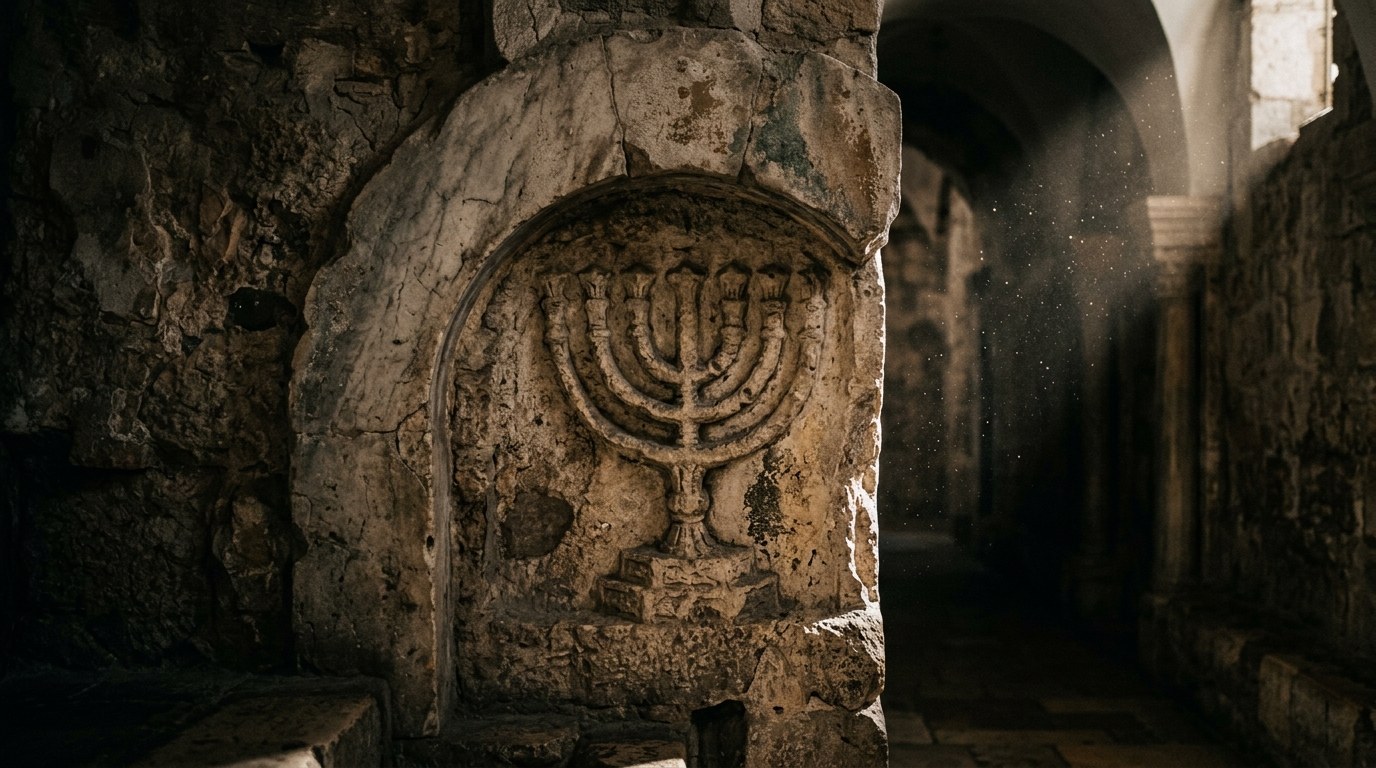
Depending on the decree and the calendar, serious scholarship lands the countdown in four different places. Some tie the cutting off of Messiah to the crucifixion, using Artaxerxes' decree and a 360 day prophetic year. Others connect Daniel 9:26's language about the city and sanctuary being destroyed to Rome's crushing of Jerusalem in 70 AD, an event Rome itself carved into a monument still standing on the Sacra Via: the Arch of Titus, showing soldiers carrying off the temple's menorah as plunder. A third, widely held academic position ties the prophecy's final verses to 167 BC, when the Greek Syrian king Antiochus Epiphanes desecrated the temple and triggered the Maccabean Revolt, the origin of Hanukkah. A fourth view holds that the final week has not happened yet at all.
None of these are fringe theories. They are careful readings of the same four verses by people who take the text seriously and still land in different places. What is not in dispute is that the text itself is old. Fragments of the book of Daniel were found among the Dead Sea Scrolls, dated by scholars to roughly a century before Christ, meaning Daniel's numbers were already circulating and being copied before many of the events people connect them to. You can see actual scroll fragments in the Leon Levy Dead Sea Scrolls Digital Library. This was not a text written after the fact to look impressive.
We are not going to hand you a verdict here, and neither does the video. The point of Daniel 9 was always to send the reader back to the actual text to do the math themselves, which is exactly what Daniel did with Jeremiah's prophecy before him.
Key Takeaways
- Daniel 9:24-27 lays out a literal countdown of seventy weeks, or 490 years, split into three blocks.
- Daniel was checking his own calendar against an earlier prophecy in Jeremiah 25, not inventing a new prediction.
- Two Persian decrees compete as the countdown's starting point: Cyrus in 538 BC and Artaxerxes in 445 BC.
- Whether you use a 360 day prophetic year or a 365 day solar year changes where the countdown lands.
- Serious scholars connect the ending to the crucifixion, to Rome's destruction of the temple in 70 AD, or to the Maccabean Revolt in 167 BC, and some argue it is still future.
- Dead Sea Scrolls fragments of Daniel predate every event the prophecy is connected to, confirming the numbers were not altered after the fact.
🙏 Pray With Us
Lord, keep us watchful and ready, not chasing dates but trusting Your timing, and give us the discipline Daniel had to search Your word for ourselves rather than settle for someone else's answer.

The Book of Enoch: What Genesis Isn't Telling You About the Watchers ft @WhatTheBibleSaysaboutkkm
▶ Watch NowSources
Popular right now: Why Does the Bible Say Not to Eat Pork?
Support Our Mission
If these stories strengthen your faith, help us keep making them, every gift goes directly into producing more Bible stories, evidence, and prophecy content.
❤ Support Our WorkMore from Kingdom Kutz Media: All news · Daily Bible Verse · Our YouTube channel
Comments
Loading comments...