 Kingdom Kutz Media
Archaeology
Thieves Ransacked a Noah's Ark Researcher's Apartment and Took Only the Evidence
Andrew Jones had his laptops and memory cards stolen weeks into the first government-permitted dig at Turkey's Durupinar formation. He had already backed up the data.

Photo: Zorka Sojka, CC BY-SA 4.0, via Wikimedia Commons (cropped, masthead added)
A man who spent the summer scanning a boat-shaped mound in eastern Türkiye came home to find his apartment torn apart. His laptops were gone. So were his computers and every memory card he owned. Other valuables stayed right where they were.
That man is Andrew Jones, founder of Noah's Ark Scans, the American Christian group working on the first government-permitted study of the Durupınar formation, a mound more than 500 feet long about 18 miles south of Mount Ararat. The team's fundraising director, Lauren Witzke, announced the break-in on X on September 26. By the next day Newsweek had the story, and supporters had pushed the team's GiveSendGo past $104,000 toward a $600,000 goal.
What Happened to Andrew Jones's Apartment?
The trouble started before the burglary. According to Charisma, Jones was woken several times between 1 and 3 a.m. by people pounding on his door, swearing, trying to get in and threatening to kill him. His team told him to stay with a friend until this year's study wrapped. He went.
While he was gone, someone broke in and turned the place upside down. Witzke said the thieves went after anything Jones might have stored Ark evidence on and ignored the rest. "They specifically knew what they were there for," she said. Newsweek reported the apartment block's security cameras weren't working during the break-in. A friend filed a report with local police. No suspect has been named.
Here's what the thieves missed. Jones had already copied the research and taken it with him. The data survived.
Who Would Want the Ark Research Gone?
Nobody knows yet, and Jones refuses to guess. He told Newsweek the incident "should not be laid at the door of Turkey." Witzke sees it differently. She has said the expedition's opposition doesn't look local and has described the attacks on it as close to demonic.
Hold both facts at once. The public record is thin, and nothing released so far ties the burglary to a person, a group or a motive. Still, a thief who walks past valuables to grab hard drives wanted something specific. And Scripture has never pretended God's truth goes unopposed. Paul told the church at Ephesus their fight was with spiritual powers, not people. Jesus said something that fits a stolen laptop better than any headline:
For nothing is secret, that shall not be made manifest; neither any thing hid, that shall not be known and come abroad.Luke 8:17 (KJV)
Backups are practical. So is prayer. This team had both.
What Has the Durupınar Dig Found So Far?
Turkish Army captain İlhan Durupınar spotted the formation in aerial photos in 1959, and people have argued about it ever since. This year is different because the work is official. Prof. Cenker Atila of Sivas Cumhuriyet University directs the government-approved project, with about 20 researchers from five countries, Arkeonews reports. Here's the haul from the 2026 season:
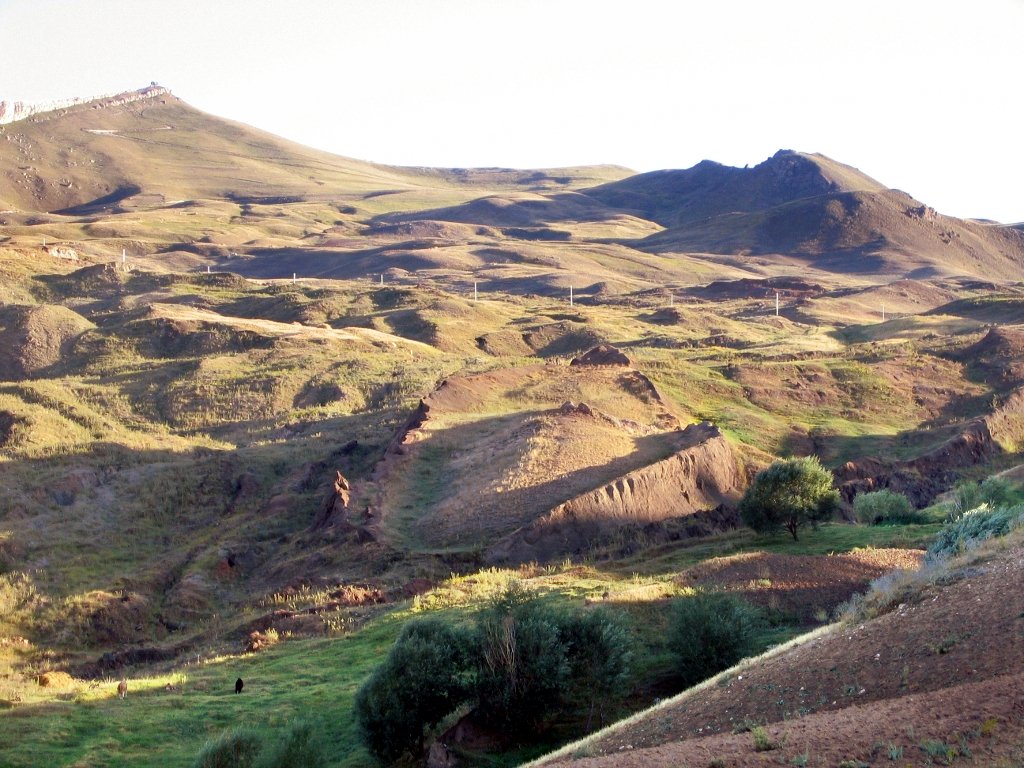
Photo: Mfikretyilmaz, CC BY 3.0, via Wikimedia Commons.

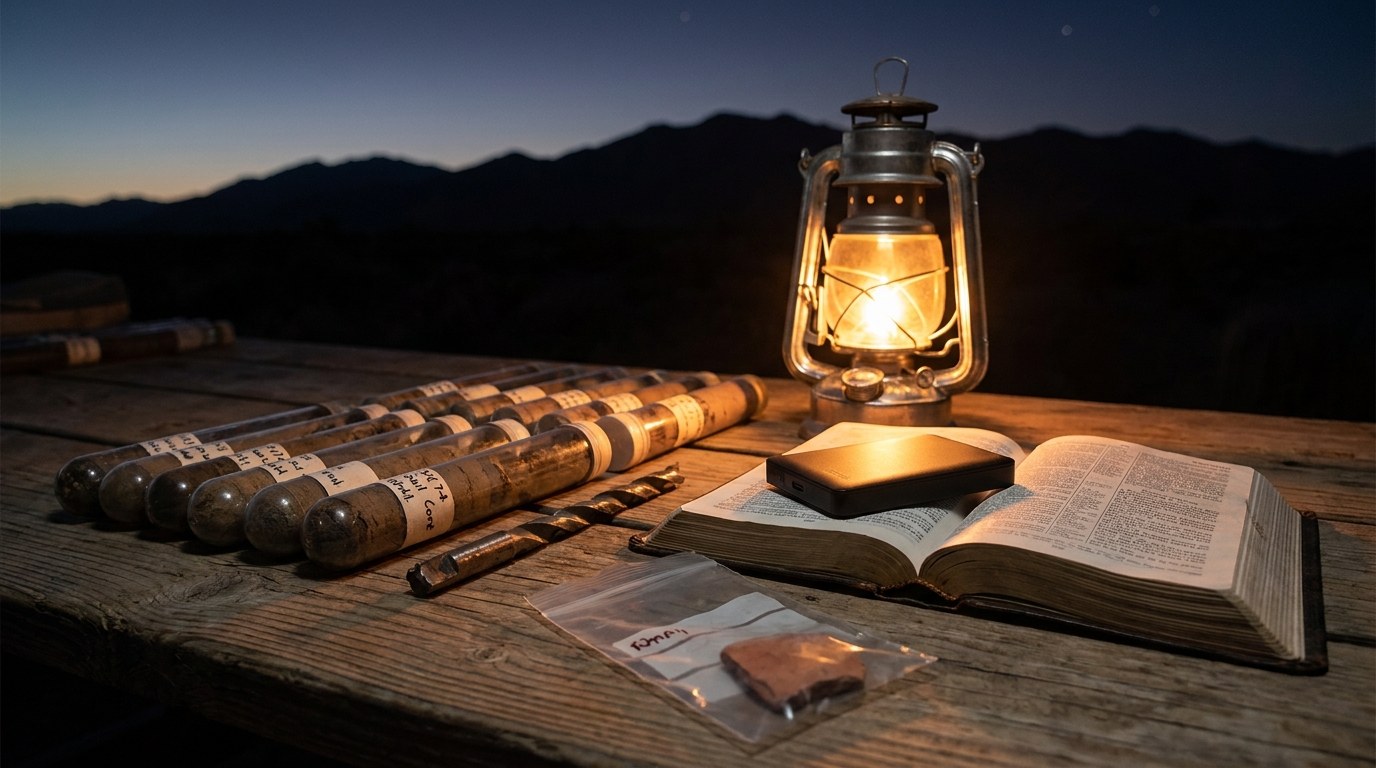
- Nearly 1,000 soil samples from 150 spots across the site, now bound for labs in Ankara.
- Pottery fragments, not yet dated.
- Layers of rich organic material from as deep as 18 meters, which Jones thinks might be decayed remains of the Ark's top deck.
- No bedrock or solid limestone in any hole drilled inside the formation so far.
- A drill bit that shattered 4 to 5 meters down on a hard layer nobody has identified.
Earlier work pointed the same direction. In 2023, researchers from Istanbul Technical University, Ağrı İbrahim Çeçen University and Andrews University reported clay, marine deposits and mollusk remains dated to roughly 3500 to 5000 BC, according to The Jerusalem Post. Radiocarbon results from this season are expected over the winter.
The skeptics deserve a fair hearing. Geologist Lorence Collins and former Ark promoter David Fasold concluded in 1996 that the mound is a natural limonite formation. A 2025 report by Turkish geological engineer Eşref Atabey blamed a landslide. Even the site's supporters say lab tests, not excitement, will settle this. That's the right posture. Genesis doesn't need a hill in Türkiye to be true. It already told us where the boat stopped:
And the ark rested in the seventh month, on the seventeenth day of the month, upon the mountains of Ararat.Genesis 8:4 (KJV)
Our video Is the Bible Real? 10 Ancient Finds walks through ten real artifacts, from the Tel Dan Stele naming the House of David to a heel bone still pierced by a Roman nail, where the dirt ended up backing a text critics had written off. If Durupınar ever joins that list, it'll be because the samples hold up in a lab, the same test every one of those ten finds passed.
The flood isn't where Genesis stops, and neither does the evidence. Genesis 11 traces Noah's son Shem down to Abram, and that's where the stories of Sarah and Hagar begin. Unlike Durupınar, the world those two women lived in is already dug up, catalogued and sitting in museums:
- Ur, the city Abram and Sarai left, was excavated by Leonard Woolley from 1922 to 1934, with finds split between the British Museum and the Penn Museum.
- Harran, where the family settled next, still stands in southeastern Türkiye, the same country as this year's Ark dig.
- The Beni Hasan tomb painting, made in Egypt around 1890 BC, shows a caravan of 37 Semitic travelers arriving with donkeys and bright woven robes, the kind of group Abram led into Egypt.
- The Nuzi tablets, clay contracts from near modern Kirkuk, Iraq, record marriages where a childless wife had to give her husband a servant to bear children. That's the custom behind Sarai handing Hagar to Abram in Genesis 16.
- The cave of Machpelah in Hebron, where Abraham buried Sarah, still sits under a massive stone enclosure built by Herod over 2,000 years ago.
Our two study guides walk through all of it chapter by chapter. Sarah: Faith That Waited covers Ur, Harran, Beni Hasan, Gerar and Machpelah. Hagar: The God Who Sees Me covers the Nuzi tablets, Ur and Egypt's guarded frontier on the road to Shur, with her journey traced on a real 1586 map. Both are on Amazon in paperback and Kindle, or as an instant PDF.

Sarah: Faith That Waited
29 pages of real archaeology, Hebrew word study, a 7-day reading plan, and reflection on Sarah's story in Genesis.

Hagar: The God Who Sees Me
25 pages of real archaeology, Hebrew word study, and reflection on Hagar's story in Genesis.
Pray for Andrew Jones's safety and for the people who threatened him. We'll report the lab results when they land.
Key Takeaways
- Andrew Jones, founder of Noah's Ark Scans, had his apartment burglarized in September 2026 after repeated late-night death threats.
- Thieves took laptops, computers and memory cards and left other valuables behind, but Jones had already backed up the research.
- No suspect has been named, and Jones has declined to guess who was behind it.
- The government-permitted 2026 dig collected nearly 1,000 soil samples, pottery fragments and organic layers up to 18 meters deep.
- Radiocarbon results are expected this winter, while several geologists still hold that the formation is natural.
🙏 Pray With Us
Lord, protect Andrew Jones and the whole research team, and soften the hearts of those who threatened them. Let what is hidden come to light, and turn this nation's eyes back to Your Word. Amen.

The Book of Enoch: What Genesis Isn't Telling You About the Watchers ft @WhatTheBibleSaysaboutkkm
▶ Watch NowPopular right now: Why Does the Bible Say Not to Eat Pork?
Support Our Mission
If these stories strengthen your faith, help us keep making them, every gift goes directly into producing more Bible stories, evidence, and prophecy content.
❤ Support Our WorkMore from Kingdom Kutz Media: All news · Daily Bible Verse · Our YouTube channel
Comments
Loading comments...