 Kingdom Kutz Media
Questions
Can Christians Get Tattoos?
What Leviticus 19:28 meant, why it doesn't bind believers today, the Egyptian world Hagar came from, and grace for the ink you already have.
Yes. The New Testament never forbids tattoos, and Leviticus 19:28 belonged to the Mosaic law, aimed at pagan mourning rites Israel was told to avoid. Christians live under the new covenant, so a tattoo is a matter of conscience and wisdom, not sin in itself. The design, your motive, and whether it honors God with your body are what count.

About a third of American adults now carry at least one tattoo, according to a 2023 Pew Research Center survey, and 29 percent of religiously affiliated adults are in that group. So the question shows up in youth groups, small groups, and tattoo shop waiting rooms every week. Can a Christian get inked? And what about the believer who already has a sleeve from before they met Jesus? Scripture answers both, and one of its most overlooked women turns out to be part of the answer.
What Does Leviticus 19:28 Say About Tattoos?
Leviticus 19:28 is the only verse in the Bible that names tattooing directly, and it forbade Israel from marking the body the way the surrounding nations did.
Ye shall not make any cuttings in your flesh for the dead, nor print any marks upon you: I am the LORD.Leviticus 19:28 (KJV)
The Hebrew phrase behind "print any marks," ketovet qa'aqa, appears nowhere else in the Old Testament. Notice the first half of the verse, too: cuttings "for the dead." The lines around it ban eating blood, using enchantment, and trimming the beard in certain ways. Each of those tied back to the religious rituals of Canaan. Theologian Wayne Grudem, writing for Crossway, reads the command as aimed at pagan mourning rites, where people gashed and marked their bodies to honor the dead and the gods connected to them.
Does That Old Testament Law Still Apply to Christians?
No, not as a binding command. Christians live under the new covenant Jesus made with His blood, and the Mosaic law no longer governs believers as a rulebook. The same chapter forbids sowing a field with mixed seed and wearing a garment of linen and wool together (Leviticus 19:19). Almost nobody thinks a cotton blend shirt is sin today.
Grudem quotes Old Testament scholar Jay Sklar on this point: modern tattoos "do not have the same pagan associations" they carried in ancient Israel. The principle underneath the command still stands, though. God's people don't mark their bodies in honor of other gods. That rules out occult symbols, demonic imagery, and anything that celebrates sin.
Did Hagar Have Egyptian Tattoos?
Genesis doesn't tell us, but the world she came from makes it a real possibility. The Bible introduces her with two facts: she was a handmaid, and she was "an Egyptian" (Genesis 16:1).
Tattooing is well documented on Egyptian women from the Middle Kingdom, roughly 2000 to 1700 BC, the general era many scholars assign to Abraham. In 1891, excavators at Deir el-Bahari found the mummy of Amunet, a priestess of the goddess Hathor, with dot and dash patterns on her arms, thighs, and abdomen. Clay figurines of women from the same period carry matching designs. Historian Joshua J. Mark explains in World History Encyclopedia that these marks likely worked as protective charms, some tied to Bes, a household god Egyptian women called on during childbirth. Centuries later at Deir el-Medina, archaeologist Anne Austin used infrared imaging to find more than 30 tattoos on a single woman.
Servants were marked too. Across the ancient Near East, Babylonian records describe slaves with an owner's name tattooed or branded on the arm.
Put it together and Hagar may well have carried marks from Egypt on her skin, some of them honoring gods she left behind. Sinai and Leviticus were still centuries away. And when she fled into the wilderness pregnant, used, and alone, the angel of the LORD found her by a spring and called her by name. She answered with a name for God nobody in Scripture had used before: "Thou God seest me" (Genesis 16:13). Whatever was written on her arms, He looked straight at her heart.
We told her full story in HAGAR The Movie, from Sarah's tent to her two journeys into the desert and the spring where God spoke to a foreign servant face to face through His angel. If you want to go deeper, our Hagar: The God Who Sees Me study guide is out in paperback on Amazon. It walks through the archaeology of her Egyptian world, a Hebrew word study on El Roi, and reflection questions for your own quiet time or small group.
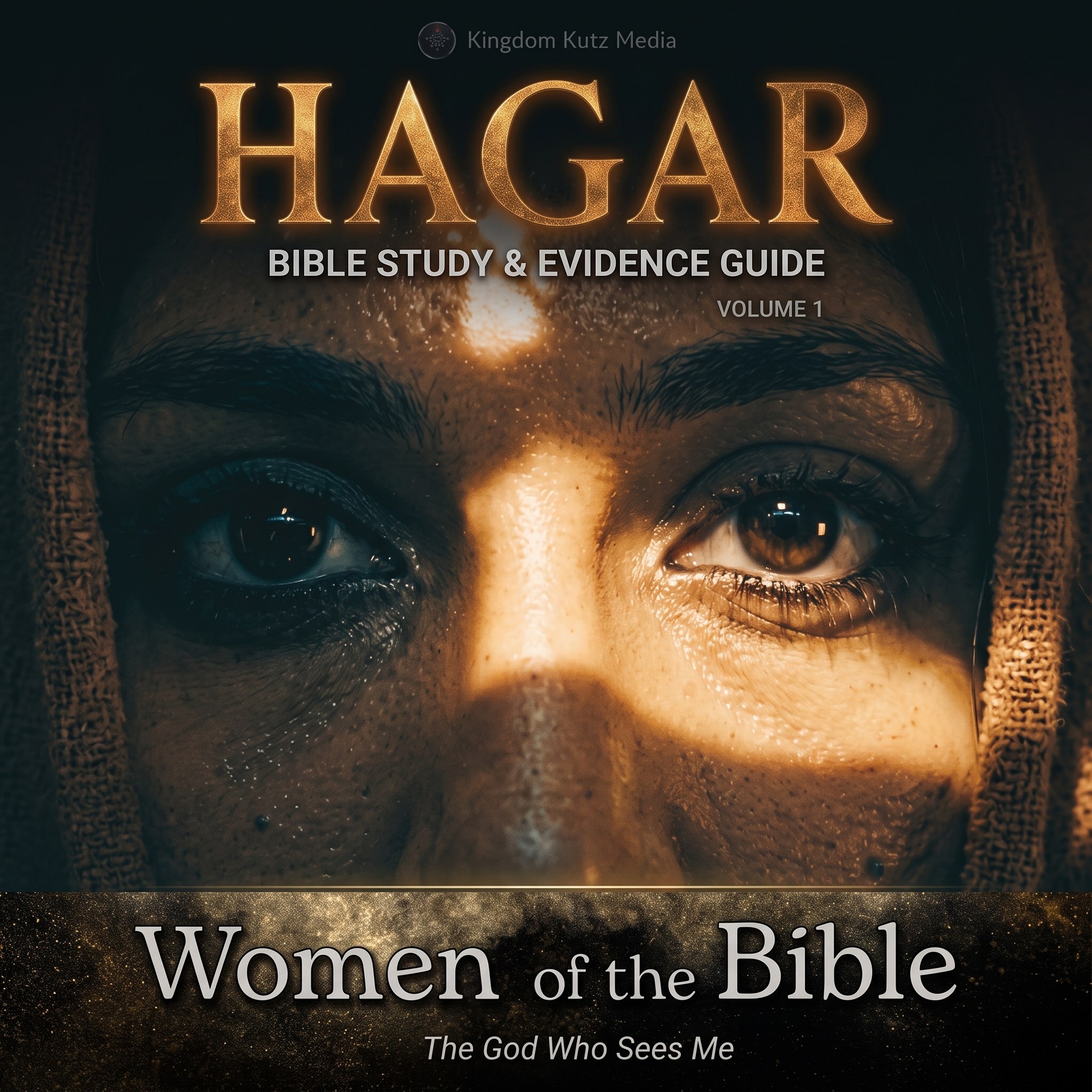
Hagar: The God Who Sees Me
25 pages of real archaeology, Hebrew word study, and reflection on Hagar's story in Genesis.
What If I Already Have Tattoos?
Then you're in the same place as millions of believers, and not one of your tattoos puts you outside God's reach. If you got them before you knew Christ, Paul already covered it.
Therefore if any man be in Christ, he is a new creature: old things are passed away; behold, all things are become new.2 Corinthians 5:17 (KJV)
Regret is common. Pew found 24 percent of tattooed Americans regret at least one. If a piece on your body carries an occult symbol, an ex's name, or a joke you'd never tell in church, you have three honest options:
- Cover it with a new design that reflects who you are now.
- Lighten or remove it with laser treatment over time.
- Leave it and let it tell the story of what God pulled you out of.
Plenty of Christians say an old tattoo starts more gospel conversations than anything else they own. If you got one as a believer and your conscience bothers you about the reason, confess it. God promises to forgive, and we walked through how far that promise goes in Does God Forgive All Sins? What you don't need is shame over ink God already saw when He called you.
Is It Wrong to Get a Christian Tattoo?
No. Some believers have done it for centuries. Coptic Christians in Egypt tattoo a small cross on the inner wrist, a practice families held onto through generations of pressure to convert, and some churches have checked for the mark at the door, according to Coptic Solidarity. In Jerusalem, the Coptic Razzouk family has tattooed pilgrims for about 700 years.
A verse on your forearm isn't automatically wise, though. GotQuestions points out that the motive behind the ink matters as much as the design.
What Should a Christian Ask Before Getting a Tattoo?
Ask whether the design, the reason, and the timing all honor God. These six questions help:
- What does this design say? If you'd be embarrassed to explain it to your pastor or your grandmother, skip it.
- Why do I want it? Paul wrote that "whatsoever is not of faith is sin" (Romans 14:23). Rebellion and peer pressure are bad reasons.
- Does it glorify God? The standard for everything, ink included, is to "do all to the glory of God" (1 Corinthians 10:31).
- Am I treating my body as His? Your body is "the temple of the Holy Ghost" (1 Corinthians 6:19).
- How will it land where I live and work? Grudem notes removal is costly and some workplaces still judge visible tattoos.
- Can I wait 30 days? A good idea is still good a month from now.
If you're weighing a tattoo tonight, pray first and give it time. If you're staring at ink you wish you didn't have, remember the name Hagar gave God in the desert. He saw her. He sees you. For a verse to carry with you today, stop by our daily verse.
🙏 Pray With Us
Lord, for the person reading this with a tattoo appointment on the calendar or ink they wish they could erase, give them wisdom, a clean conscience, and peace in knowing You see them. Let every part of their life, skin included, point back to Your glory. In Jesus' name, amen.

The Book of Enoch: What Genesis Isn't Telling You About the Watchers ft @WhatTheBibleSaysaboutkkm
▶ Watch NowSources
Support Our Mission
If these stories strengthen your faith, help us keep making them, every gift goes directly into producing more Bible stories, evidence, and prophecy content.
❤ Support Our WorkMore from Kingdom Kutz Media: All news · Daily Bible Verse · Our YouTube channel
Comments
Loading comments...